My krav maga instructor went back to Israel. He wanted to go back as soon as the plague started, but I guess being in a country that is practically unaffected is better than going to a place that was hit pretty hard in the beginning. After the initial blast, Israel was one of the first countries to start working on a vaccine, and they started shipping drugs to other countries long before Russia and the United States got the spotlight for shipping their drugs. After he returned, cases went up. That is probably a coincidence.
On a slightly smaller scale than a worldwide pandemic, that left me without a teacher. We do not exactly have krav maga schools on every corner around here. According to the Times of Israel, there are about 500 Israelis living in Taiwan, and the overwhelming majority live in Taipei. I know nothing about where the Times of Israel leans politically or how respected they are. The only newspapers I remember anyone reading when I worked in Tel Aviv were the Jerusalem Post and Haaretz, though there are plenty of others. The government of Taiwan does not publish an easy spreadsheet of every foreign resident's nationality, and they have never been interested in keeping track of anyone's religious affiliations, which makes sense when Buddhism, Taoism, and Confucianism tend to overlap, and all of them mix and match with a wide variety of folk religions. Trying to label everyone would be a nightmare.
The good news is that my krav maga instructor recommended a replacement before he left the country. I was not especially happy about it since he was my third instructor and now I had to move on to number four. For some reason, I was hoping to have the same dashi for 20 years. So far, none of them have lasted 20 months.
My new laoshi is Taiwanese. I was reluctant at first. My previous instructors were Israeli, which I preferred since krav maga was born and raised in Israel. Then I looked up the new guy's CV. He has more than enough wushu experience in wing chun, jujutsu, and aikido, and has been studying krav maga for almost as long as I have been alive. I never thought twice about learning the Indian religion of Buddhism from Taiwanese monks, so why not continue learning Israeli defense from a Taiwanese shifu?
Not that I need the most advanced grand master for a teacher. I have been studying krav maga for two years this month. I am a lifetime away from being an expert. At best, I will be able to say I know a little something about it after 20 years. In the meantime, I can probably disable an attacker, assuming they have no experience. I am in no position to win any trophies. Fortunately, and one of the things I like about krav maga, is that it is not about scoring points in a competition. It is about defending yourself in real life as quickly and aggressively as possible. Unlike most East Asian forms, there is no such thing as an illegal move. In a judo competition, there are rules and regulations. You can get disqualified for doing something the wrong way. In krava maga, you can do whatever it takes to stop your opponent, depending on local laws.
My personal favorite move entails breaking an elbow and/or dislocating a shoulder. I have never used it in a real world situation, and hope I never do. It seems like it would be pretty effective. Breaking legs is also surprisingly easy. The femur is the strongest bone in the body, but snap the patella and that person is going down immediately. Disable the connection between femur and tibia and walking is impossible, even if the bones are fully intact. Actually breaking someone's femur can easily lead to lifelong issues. Instead, you can dislocate their patella without causing any permanent injury, as long as they get prompt medical attention.
My last instructor spent about a month teaching me how to break bones in the hand, with emphasis on the thumb. The thumb is a good target because of its importance to most people, and it usually stands apart from the fingers. Fracture someone's pinkie and they might keep charging, though unlikely. Pretty much everyone forgets whatever they were trying to do once their thumb is hanging flaccid.
Naturally, we learned about other soft targets. The eyes and throat are impressively weak spots. I want to assume I would hesitate in injuring someone's eyes, even in a life or death situation. It seems to me that potentially blinding someone permanently should be off limits, but in krav maga, nothing is off limits. The groin is especially popular, and one of the first body parts most men reflexively protect. No one ever protects their hands. There is also a neat trick involving the attacker's liver, but you have to know exactly where it is without any diagrams, and most of it is protected by ribs.
Do I really need to know how to break another person's bones? Not at all. I live in Taiwan and sometimes China. The odds of my being physically attacked or robbed by a stranger are practically nil. This is not that kind of culture.
As much as I love almost everything about Japan, I am more likely to be harassed there than here. Japan is enlightened in many ways, but still has a problem with entitled men who think women are property. As an obvious foreigner, I have never personally experienced it, and most likely never will. I am a little surprised that creepy men grabbing women in public is still a thing in the 21st century. It is very illegal, and the police take it more seriously than they ever have, but the people with the most power are always slow to stop acting like tiny dicks. If Japanese women knew krav maga, it would end overnight.
I might never work in Tel Aviv again. I have no doubt I will go back to visit some day. Israel might not be as safe as Japan, but it is nothing like the war zone Americans are told it is. I never felt anything but safe on the streets of Tel Aviv and Jerusalem. Those would seem like the perfect places to practice some krav maga moves. Or maybe not, since more people know how to respond there. Most Israelis spend two or three years in the military, the home of krav maga.
I used to work in Europe from time to time. Not so much lately. I assume I will work there again in the future, after they fix their health issues. Amsterdam, Barcelona, and Paris are all wonderful cities. And far more dangerous than Israel or Japan. The laws in the Netherlands, Spain, and France oppose most acts of violence. As a foreigner, I am more likely to be targeted by pickpockets than anything else. I never have been, though I think that would be a better scenario than some crazy dude with a knife.
Legally, I am an American citizen. I have only set foot in the country three times in the last ten years, but I can go there any time. It is one of the few places in the world where they have to let me in, no matter what. It is also the most dangerous place I will ever go. This is the internet, so I have to point out that, no, I am not saying the United States is the most dangerous country in the world. It is the most dangerous country I will probably ever know. I have no intention of ever going to Yemen or Afghanistan. You never know what the future holds, but I'm not going to break out the Fodor's North Korea just yet.
In the United States, I am far more likely to be attacked, robbed, and/or shot than anywhere else I have ever been. I would bet serious money that I will never be attacked anywhere in Europe. I would bet everything I own that I will never be shot in China or Japan. Whenever I leave the United States, I am more than a little surprised that I was not the victim of one crime or another. Of every place on this planet that I have ever been and am ever likely to go, krav maga is most useful in the United States.
Of course, this is all academic. I am a third year student. There is far more in front of me to learn than behind me. And if I were ever in a situation where I actually needed to use it, for all I know, I might curl up in a ball and pass out. Anyone can say they would be the nerves of steel badass, run into the burning building, and single-handedly save the universe from alien invasion, but you never really know how you will react to something out of the ordinary until it happens. More often than not, my fight or flight response is to fight. Manly men tough guys think that is cool, even though running away is often the absolute best thing you can do. In the unlikely event that I ever need it, learning krav maga could protect me from my own instincts to investigate the fire.
Even if I never get to break any bones, krav maga has taught me a great deal about situational awareness and intuition training. And the extra exercise never hurts.
Showing posts with label health cares. Show all posts
Showing posts with label health cares. Show all posts
Monday, April 4, 2022
Thursday, September 30, 2021
Huang Yi Jun
Huang Yi Jun was diagnosed with T-cell prolymphocytic leukemia at the beginning of September. She died in the middle of September. Her funeral was Saturday.
Yi Jun and I met at a medical facility in April 2020. We were both trying to gain weight. My weight loss was from a TBI a few years earlier. Hers was from leukemia, though no one knew it at the time. She was tested for a wide variety of ailments, but apparently not the type of leukemia she had. Neither of us gained any weight at the camp, but we became friends.
Yi Jun was born and raised in Chiayi Hsien, Taiwan. She was always a good student and got into the best schools. She studied chemical engineering at National Taiwan University, which is generally considered the best school in Taiwan, according to people at National Taiwan University. After graduating, she moved to Michigan, started her career, got married, and had a daughter.
English was never her best subject, but she had a high enough ranking job, and more importantly, made enough money that she faced less discrimination than the average expat in the United States. Her American husband, on the other hand, often complained about her poor English. Naturally, he never bothered to learn Chinese. They also had the usual cultural issues. Americans often have problems with people from other states. Taiwan might as well be on a different planet. I never met her ex-husband, but from what she told me, he sounded like a typical xenophobe. Why he ever married a Taiwanese is anyone's guess. My assumption is that he thought she would be a passive and obedient wife, which is a bizarre stereotype in the United States that is as far removed from reality as their views on international relations and the shape of the Earth.
Four years after getting married, they were divorced. When Yi Jun decided to move back to Taiwan, there was a custody battle for their daughter. Since she wanted to take her child, who was born in the United States and far too young to make any decisions for herself, to one of them foreigner countries that don't speak no English, the court gave the father full custody.
Before fully putting her life back together, Yi Jun met a man from France. I would have advised against jumping in the pool so soon after almost drowning, but I did not know her at the time, so she moved to France and married Didier. Ironically, this husband got a job in Ohio. Yi Jun knew she could easily find a job in the United States with her chemical engineering background, and Ohio was much closer to her daughter than Taiwan or France, so she moved again. Fortunately, this husband was French, so their cultural differences were never seen as a negative.
When she started to get sick and lose weight, they spent a small fortune on doctors and tests. One doctor told her it was stress. Several treated her as if she had a learning disability because she was a foreigner who spoke English poorly, never mind that she was fluent in twice as many languages as they were. Every doctor who failed to diagnose her leukemia sent a bill and demanded to be paid in full. Eventually, Yi Jun and Didier went to Taiwan, where no one has to go bankrupt to get healthcare. Her doctor sent her to the Taipei weight camp, where we met.
A few days after getting a diagnosis, she started chemotherapy for the sole purpose of wiping out her immune system. Chemotherapy does little to nothing for leukemia, but they used it to prepare her body for the stem cell transplant. I was surprised by how quickly they found a bone marrow donor. Since the doctors never had to wait around for any insurance company approval, they moved quickly at every stage of her treatment. It was as if treating her was more important than filling out the right paperwork. When she went home from the hospital, everyone was optimistic. T-cell prolymphocytic leukemia has a ridiculously low survival rate, but there were no complications from the stem cell transplant. Everything was looking good.
Despite feeling terrible, Yi Jun was worried about looking terrible. She was always a pretty girl who looked younger than she really was. When I met her, I thought she was in her mid twenties. After chemo, she looked middle aged. We talked a lot about losing our hair. Mine had grown back and was getting longer every day by the time she lost hers. It is amazing how important hair is to young women. You expect men to go bald, but a woman without hair is a shock. Yi Jun and I both went from having long hair most of our lives to suddenly having nothing. She wore a wig pretty much all the time. I used to wear a lot of hats.
We talked about recovery. Mine was slow and painful, and she took comfort in the long, detailed stories that make most people's eyes glaze over. A craniotomy is absolutely nothing like cancer, but she liked the parts about overcoming the odds and getting myself back to full speed, or at least 90%. She was competitive enough to think that if I could do it, she could, too.
Yi Jun's sister told me over the phone that Yi Jun died. I would have preferred to hear that in person, but at least it was not a text message. I only knew her for 17 months, so I was probably pretty far down the list of people to call. All things considered, it was nice of her sister to let me know.
Yi Jun's husband was in Taiwan during the last round of treatment and was with her in the hospital when she died, luckily. He speaks no Chinese and her family speaks no French. At least the doctors could speak to him in English. But it was the family that planned the funeral, and none of them knew more than a few words or phrases in English. I was drafted as their translator.
Yi Jun and Didier lived in France and the United States. Yi Jun mostly lived away from Taiwan the last ten years of her life. But there was never any question among her family that her funeral would be in Taiwan and everything would be done the Taiwan way. This was news to Didier, but he was in no position to argue. He later told me that he would have preferred taking her back to France and doing everything the French way, but by then it was too late.
I have only lived in Taiwan for 16 months; less time than I knew Yi Jun. I am not the first person you go to for information or explanations about Taiwan funeral practices. In fact, Yi Jun's was my first Taiwan funeral. Yet I was supposed to tell Didier what was going on before it even happened. The first of many awkward situations was when I read her obituary to him. It was written by her family and pretty standard as far as obituaries go. It mentioned when and where she was born and when and how she died. It mentioned her parents more than you usually see in Western obituaries. It mentioned that she was survived by her husband, two sons, and daughter. This part was a little confusing. Yi Jun had a daughter with her first husband and no children with Didier. They were married less than three years when she got sick. Didier assumed I was translating the obituary incorrectly, but it very clearly said two sons and one daughter, and gave their names.
A quick phone call to her sister cleared everything up. I did not know her sister particularly well, but she was my liaison for all things funeral. It turns out, according to her sister, that Yi Jun married a Taiwanese at 18, had two sons, and was divorced by 21. Her American husband, who I thought was her first, was her second. They got married when Yi Jun was 24 and divorced at 28. Didier was her third husband. I have no idea why Yi Jun never told me about her Taiwanese husband, or her two sons, but we only knew each other for 17 months. I never knew her when she was healthy. Then again, she told me plenty about her American husband and daughter.
I was stunned by this new information, but I could see where maybe she did not go around telling everyone that she got married too young and it ended poorly. And maybe it was easy to talk to me about the American husband because I have some experience with failed American relationships. But the real shock was how shocked Didier was to learn about the Taiwanese husband and two sons. She never mentioned them to him either. He knew all about the American husband and daughter, including plenty of detailed stories Yi Jun never told me, but she never told her French husband that he was number three. Didier had a lot of questions, but I had none of the answers. He would have to talk to Yi Jun's sister, and that would require me translating. Somehow, I landed in the middle of a Taiwanese telenovela. We tried to set up a lunch before the funeral, but everyone was too busy. To date, this conversation has not happened. I think her family is avoiding Didier as politely as possible. They knew a Yi Jun that he never met.
Fortunately, the funeral was straightforward and pretty intuitive. The funeral home put the body in a casket, everyone came and sat in the audience, a few people gave speeches, including her oldest son – who was not at all a shock to most of the people in attendance, a small choir sang “Amazing Grace” and a few Taiwan folk songs, they showed a low quality video that looked like a 1980s VHS tape of people who could not be there in person giving their condolences, the family put flowers on Yi Jun's body, everyone else lined up to cover her with flowers, the funeral people dramatically carried the coffin into a waiting hearse with everyone following in a processional, and most of the guests went home. It was only after they took the body away that Taiwan custom started to diverge from what Didier and I consider routine.
None of Yi Jun's ex-husbands were at the funeral. Both of her teenage sons were there, but her daughter was not. Yi Jun and her daughter never had the best relationship, and as an American, the daughter would have been subject to some strict entry requirements had she tried to come to Taiwan. A few of Yi Jun's Ohio and Michigan friends and colleagues recorded messages for the low quality video, but her daughter was not among them.
Only the family followed the hearse away from the funeral. Since I was Didier's translator, I came along for the ride. Very few bodies are buried whole in Taiwan, so we did not go to a cemetery to inter the coffin. We went to the local crematorium. I had warned Didier about this ahead of time, and cremation is not so unusual in his country, but I could not warn him about how they would prepare the body because no one ever told me. When they asked him to help take Yi Jun out of the coffin and wash her body, we were both surprised. I had no idea this was part of Taiwanese culture. Most people around here never talk about funeral rites, until it is time to get down to business. I like to think I am pretty open minded when it comes to cultures different from my own, but I was more than a little uncomfortable watching Didier and a few female relatives wash the lifeless corpse of my friend. Didier was pretty much horrified, but he went along with it because it was expected of him, and he mostly walked around in a daze that day.
Mercifully, we did not have to personally set the body on fire. They put her in a cheaper coffin, since the one at the funeral was a ceremonial rental, and machines did most of the work. We were not even in the same building when they fired up the oven.
I had a chance to warn Didier about the next part, because I knew it was going to happen. Once cremated, the remains were brought out to the family, where they literally picked her bones. In Taiwan, just like China, and probably more than a few East Asian countries, the bones are not pulverized to a fine dust and placed in an urn. They are scattered on a large tray where immediate family can pick out the bone fragments they want to keep. Most of her relatives will bury their portion of Yi Jun in their local cemetery and visit her every year during 清明節 (Tomb Sweeping Day). Didier's plan is to take his Yi Jun bones back to France and bury her after a more familiar memorial service.
The point of a funeral, as far as I know, is to say goodbye to someone. Yi Jun's funeral was not for or about me, and almost everyone knew her longer than I did, but I never really got a chance to say goodbye since I was busy explaining everything to Didier. It was an honor to be in that position, and a highly educational experience, but I would have liked the luxury of mourning my friend with everyone else.
Huang Yi Jun was 34 years old.
Yi Jun and I met at a medical facility in April 2020. We were both trying to gain weight. My weight loss was from a TBI a few years earlier. Hers was from leukemia, though no one knew it at the time. She was tested for a wide variety of ailments, but apparently not the type of leukemia she had. Neither of us gained any weight at the camp, but we became friends.
Yi Jun was born and raised in Chiayi Hsien, Taiwan. She was always a good student and got into the best schools. She studied chemical engineering at National Taiwan University, which is generally considered the best school in Taiwan, according to people at National Taiwan University. After graduating, she moved to Michigan, started her career, got married, and had a daughter.
English was never her best subject, but she had a high enough ranking job, and more importantly, made enough money that she faced less discrimination than the average expat in the United States. Her American husband, on the other hand, often complained about her poor English. Naturally, he never bothered to learn Chinese. They also had the usual cultural issues. Americans often have problems with people from other states. Taiwan might as well be on a different planet. I never met her ex-husband, but from what she told me, he sounded like a typical xenophobe. Why he ever married a Taiwanese is anyone's guess. My assumption is that he thought she would be a passive and obedient wife, which is a bizarre stereotype in the United States that is as far removed from reality as their views on international relations and the shape of the Earth.
Four years after getting married, they were divorced. When Yi Jun decided to move back to Taiwan, there was a custody battle for their daughter. Since she wanted to take her child, who was born in the United States and far too young to make any decisions for herself, to one of them foreigner countries that don't speak no English, the court gave the father full custody.
Before fully putting her life back together, Yi Jun met a man from France. I would have advised against jumping in the pool so soon after almost drowning, but I did not know her at the time, so she moved to France and married Didier. Ironically, this husband got a job in Ohio. Yi Jun knew she could easily find a job in the United States with her chemical engineering background, and Ohio was much closer to her daughter than Taiwan or France, so she moved again. Fortunately, this husband was French, so their cultural differences were never seen as a negative.
When she started to get sick and lose weight, they spent a small fortune on doctors and tests. One doctor told her it was stress. Several treated her as if she had a learning disability because she was a foreigner who spoke English poorly, never mind that she was fluent in twice as many languages as they were. Every doctor who failed to diagnose her leukemia sent a bill and demanded to be paid in full. Eventually, Yi Jun and Didier went to Taiwan, where no one has to go bankrupt to get healthcare. Her doctor sent her to the Taipei weight camp, where we met.
A few days after getting a diagnosis, she started chemotherapy for the sole purpose of wiping out her immune system. Chemotherapy does little to nothing for leukemia, but they used it to prepare her body for the stem cell transplant. I was surprised by how quickly they found a bone marrow donor. Since the doctors never had to wait around for any insurance company approval, they moved quickly at every stage of her treatment. It was as if treating her was more important than filling out the right paperwork. When she went home from the hospital, everyone was optimistic. T-cell prolymphocytic leukemia has a ridiculously low survival rate, but there were no complications from the stem cell transplant. Everything was looking good.
Despite feeling terrible, Yi Jun was worried about looking terrible. She was always a pretty girl who looked younger than she really was. When I met her, I thought she was in her mid twenties. After chemo, she looked middle aged. We talked a lot about losing our hair. Mine had grown back and was getting longer every day by the time she lost hers. It is amazing how important hair is to young women. You expect men to go bald, but a woman without hair is a shock. Yi Jun and I both went from having long hair most of our lives to suddenly having nothing. She wore a wig pretty much all the time. I used to wear a lot of hats.
We talked about recovery. Mine was slow and painful, and she took comfort in the long, detailed stories that make most people's eyes glaze over. A craniotomy is absolutely nothing like cancer, but she liked the parts about overcoming the odds and getting myself back to full speed, or at least 90%. She was competitive enough to think that if I could do it, she could, too.
Yi Jun's sister told me over the phone that Yi Jun died. I would have preferred to hear that in person, but at least it was not a text message. I only knew her for 17 months, so I was probably pretty far down the list of people to call. All things considered, it was nice of her sister to let me know.
Yi Jun's husband was in Taiwan during the last round of treatment and was with her in the hospital when she died, luckily. He speaks no Chinese and her family speaks no French. At least the doctors could speak to him in English. But it was the family that planned the funeral, and none of them knew more than a few words or phrases in English. I was drafted as their translator.
Yi Jun and Didier lived in France and the United States. Yi Jun mostly lived away from Taiwan the last ten years of her life. But there was never any question among her family that her funeral would be in Taiwan and everything would be done the Taiwan way. This was news to Didier, but he was in no position to argue. He later told me that he would have preferred taking her back to France and doing everything the French way, but by then it was too late.
I have only lived in Taiwan for 16 months; less time than I knew Yi Jun. I am not the first person you go to for information or explanations about Taiwan funeral practices. In fact, Yi Jun's was my first Taiwan funeral. Yet I was supposed to tell Didier what was going on before it even happened. The first of many awkward situations was when I read her obituary to him. It was written by her family and pretty standard as far as obituaries go. It mentioned when and where she was born and when and how she died. It mentioned her parents more than you usually see in Western obituaries. It mentioned that she was survived by her husband, two sons, and daughter. This part was a little confusing. Yi Jun had a daughter with her first husband and no children with Didier. They were married less than three years when she got sick. Didier assumed I was translating the obituary incorrectly, but it very clearly said two sons and one daughter, and gave their names.
A quick phone call to her sister cleared everything up. I did not know her sister particularly well, but she was my liaison for all things funeral. It turns out, according to her sister, that Yi Jun married a Taiwanese at 18, had two sons, and was divorced by 21. Her American husband, who I thought was her first, was her second. They got married when Yi Jun was 24 and divorced at 28. Didier was her third husband. I have no idea why Yi Jun never told me about her Taiwanese husband, or her two sons, but we only knew each other for 17 months. I never knew her when she was healthy. Then again, she told me plenty about her American husband and daughter.
I was stunned by this new information, but I could see where maybe she did not go around telling everyone that she got married too young and it ended poorly. And maybe it was easy to talk to me about the American husband because I have some experience with failed American relationships. But the real shock was how shocked Didier was to learn about the Taiwanese husband and two sons. She never mentioned them to him either. He knew all about the American husband and daughter, including plenty of detailed stories Yi Jun never told me, but she never told her French husband that he was number three. Didier had a lot of questions, but I had none of the answers. He would have to talk to Yi Jun's sister, and that would require me translating. Somehow, I landed in the middle of a Taiwanese telenovela. We tried to set up a lunch before the funeral, but everyone was too busy. To date, this conversation has not happened. I think her family is avoiding Didier as politely as possible. They knew a Yi Jun that he never met.
Fortunately, the funeral was straightforward and pretty intuitive. The funeral home put the body in a casket, everyone came and sat in the audience, a few people gave speeches, including her oldest son – who was not at all a shock to most of the people in attendance, a small choir sang “Amazing Grace” and a few Taiwan folk songs, they showed a low quality video that looked like a 1980s VHS tape of people who could not be there in person giving their condolences, the family put flowers on Yi Jun's body, everyone else lined up to cover her with flowers, the funeral people dramatically carried the coffin into a waiting hearse with everyone following in a processional, and most of the guests went home. It was only after they took the body away that Taiwan custom started to diverge from what Didier and I consider routine.
None of Yi Jun's ex-husbands were at the funeral. Both of her teenage sons were there, but her daughter was not. Yi Jun and her daughter never had the best relationship, and as an American, the daughter would have been subject to some strict entry requirements had she tried to come to Taiwan. A few of Yi Jun's Ohio and Michigan friends and colleagues recorded messages for the low quality video, but her daughter was not among them.
Only the family followed the hearse away from the funeral. Since I was Didier's translator, I came along for the ride. Very few bodies are buried whole in Taiwan, so we did not go to a cemetery to inter the coffin. We went to the local crematorium. I had warned Didier about this ahead of time, and cremation is not so unusual in his country, but I could not warn him about how they would prepare the body because no one ever told me. When they asked him to help take Yi Jun out of the coffin and wash her body, we were both surprised. I had no idea this was part of Taiwanese culture. Most people around here never talk about funeral rites, until it is time to get down to business. I like to think I am pretty open minded when it comes to cultures different from my own, but I was more than a little uncomfortable watching Didier and a few female relatives wash the lifeless corpse of my friend. Didier was pretty much horrified, but he went along with it because it was expected of him, and he mostly walked around in a daze that day.
Mercifully, we did not have to personally set the body on fire. They put her in a cheaper coffin, since the one at the funeral was a ceremonial rental, and machines did most of the work. We were not even in the same building when they fired up the oven.
I had a chance to warn Didier about the next part, because I knew it was going to happen. Once cremated, the remains were brought out to the family, where they literally picked her bones. In Taiwan, just like China, and probably more than a few East Asian countries, the bones are not pulverized to a fine dust and placed in an urn. They are scattered on a large tray where immediate family can pick out the bone fragments they want to keep. Most of her relatives will bury their portion of Yi Jun in their local cemetery and visit her every year during 清明節 (Tomb Sweeping Day). Didier's plan is to take his Yi Jun bones back to France and bury her after a more familiar memorial service.
The point of a funeral, as far as I know, is to say goodbye to someone. Yi Jun's funeral was not for or about me, and almost everyone knew her longer than I did, but I never really got a chance to say goodbye since I was busy explaining everything to Didier. It was an honor to be in that position, and a highly educational experience, but I would have liked the luxury of mourning my friend with everyone else.
Huang Yi Jun was 34 years old.

Thursday, May 13, 2021
Burn You Up, Burn You Down
Way back in the olden days of January, I joined a gym near my house. I did not join for the gym. That part of the building was unimpressive. I joined for the swimming pools. Specifically, the lap pool with a dozen lanes, the ample hot tubs, and the water massages.
Before the swimming pool, I would jog or ride a bicycle every morning. I was thinking about buying my own bicycle since I always use the city bikes that are parked all over town. Having my own bicycle would save me NT$40 a day, and even though the city bikes are well maintained, anything I bought would probably be a better quality.
After I joined the gym, I mostly swam every morning, and ran or biked maybe once a week. Buying my own bicycle was no longer a priority. Though I did miss riding along the river in the morning. I love swimming, but the pool was indoors, so riding a bicycle outdoors was always a nice change of pace. And the more I thought about it, the more convenient the city bikes were. When I want to use one, I go to any one of a number of stations, scan it out with my MRT card, and return it to any station when finished. Every bicycle has a locking system, but parking and security are not much of an issue when you only have it with you while riding. I never have to oil chains, find a place to keep it, and best of all, I have never had to fix a flat tire. NT$40 is literally spare change. I have no idea what coffee costs, but NT$40 could buy two bottles of water from 7-Eleven.
Then everything changed. As it often does. The current drought closed the swimming pool, which upset pretty much every member of the gym. Almost no one went there for the exercise equipment. Everyone was in it for the pools. Since we were all members, and we had all paid our fees in advance, the gym was in a sticky situation. Giving everyone their money back would probably destroy the gym financially, and doing nothing was not an option. Taiwanese culture encourages complaining, even more than Chinese culture. Since most of the members were in a high enough tax bracket to usually get what they want, legal action was on the table. The government that forced the gym to close the swimming pools probably would have sided with the members over the gym.
Fortunately for all concerned, they were already working on opening a new facility. The timing of the drought was not ideal, but droughts rarely are.
About two years ago, the company that owns the swimming pools started building a new gym. Everyone agreed that the gym in the pool building was a waste of space, but there was no possible way to add onto the building without the neighbors volunteering to abandon their properties. Instead, they built an entirely new building on a separate site.
The new gym is maybe one hundred times larger. That sounds like a ridiculous exaggeration, but the old gym was tiny and the new one is pretty big. The gym above the swimming pool was no bigger than a standard business hotel gym, with two treadmills, two exercise bikes, some light free weights and a couple of yoga mats. The new gym is five stories, with an entire floor of treadmills and exercise bikes, including a few recumbent bikes. It also has a wide variety of machines for each muscle group, including more than a few machines I have not figured out how to use yet.
Most importantly, there is a swimming pool. It does not have as many lanes as the old pool, but it is long enough for laps. Unlike the old pool, it is outdoors, which might be a challenge in an environment like Taiwan. The fewer hot tubs are smaller and indoors, and segregated by gender. I like that part. Unfortunately, the pool and hot tubs are just as closed by the drought as the old pools. When they designed and built it, there was no drought. By the time the gym opened, they were not allowed to use enough water to fill them. They look like they will be nice to use someday.
The old pool was a quick walk from my apartment. The new gym is a quick drive. So far, there is more than enough parking. That will probably change as membership increases. But I have already found a solution to a future problem that may or may not ever occur. My apartment is close to a river. Along the river are a series of parks with bicycle paths. One particular path can take me from practically my front door to within a block of the gym. There are city bicycle stations all along the river and one in front of the gym. Since the city bikes are free for the first 30 minutes, I can ride to the gym for the same price as walking, and get there much faster. At this point, I see no reason to buy my own bicycle.
Since the new gym is much larger, so are the showers and locker rooms. At the old pool, every member could put a lock on any available locker and leave it there indefinitely. Not having to drag all your crap in every day was pretty convenient. At the new gym, all lockers are expected to be empty by midnight. I have no idea what they do with anything anyone leaves overnight, but I have decided to follow their rules and not find out. Carrying a gym bag to the gym is a pretty standard activity.
Something I could not help but notice right away was the amount of public nudity at the new gym. At the old pool, you could hang out in the locker room all day and never see anything more scandalous than someone in a bathing suit. Everyone kept things in their locker, showered in the shower cubicles and changed in the changing cubicles. At the new gym, there are no changing cubicles. I would assume that most Taiwanese, being a fairly modest and shy people, would change in the showers. Instead, everyone changes at their lockers. And since the segregated saunas are adjacent to the locker rooms, some casually walk from one to the other as naked as dolphins. When I lived in China, I used to say that if you were a 12-year-old boy with the super power to turn invisible, China would be a disappointing place. As it turns out, a Taiwanese gym would be just as good as a 1980s teen movie.
At the old pool, no towels were allowed beyond the locker rooms. I never understood that rule. At the new gym, using towels with the machines is encouraged, though most people walk around without one. Gym etiquette is a little different here than anywhere else I have worked out. Rather than let a towel catch your drippings, everyone lets whatever comes out of their bodies onto the machines. But there is always a spray bottle full of isopropyl alcohol near every machine. Instead of wiping off a machine after use with a towel, everyone sprays alcohol on the machine before use. A wide variety of disinfectants have been pretty much everywhere since the last SARS outbreak, and no one thinks twice about spraying and/or wiping surfaces on a regular basis. I don't know anything about the gym's maintenance schedule, but I have seen employees practically hose down machines with alcohol when not in use.
With the loss of the old swimming pools and the addition of the new gym, I went back to jogging or riding a bicycle outdoors in nature every morning, or at least the closest thing we get to nature around here. And now I go to a real gym at night. Someday, I will be able to swim at night, or in the morning, but for now, I climb onto strange machines and push weights around while listening to music on a telephone. Just as nature intended.
Before the swimming pool, I would jog or ride a bicycle every morning. I was thinking about buying my own bicycle since I always use the city bikes that are parked all over town. Having my own bicycle would save me NT$40 a day, and even though the city bikes are well maintained, anything I bought would probably be a better quality.
After I joined the gym, I mostly swam every morning, and ran or biked maybe once a week. Buying my own bicycle was no longer a priority. Though I did miss riding along the river in the morning. I love swimming, but the pool was indoors, so riding a bicycle outdoors was always a nice change of pace. And the more I thought about it, the more convenient the city bikes were. When I want to use one, I go to any one of a number of stations, scan it out with my MRT card, and return it to any station when finished. Every bicycle has a locking system, but parking and security are not much of an issue when you only have it with you while riding. I never have to oil chains, find a place to keep it, and best of all, I have never had to fix a flat tire. NT$40 is literally spare change. I have no idea what coffee costs, but NT$40 could buy two bottles of water from 7-Eleven.
Then everything changed. As it often does. The current drought closed the swimming pool, which upset pretty much every member of the gym. Almost no one went there for the exercise equipment. Everyone was in it for the pools. Since we were all members, and we had all paid our fees in advance, the gym was in a sticky situation. Giving everyone their money back would probably destroy the gym financially, and doing nothing was not an option. Taiwanese culture encourages complaining, even more than Chinese culture. Since most of the members were in a high enough tax bracket to usually get what they want, legal action was on the table. The government that forced the gym to close the swimming pools probably would have sided with the members over the gym.
Fortunately for all concerned, they were already working on opening a new facility. The timing of the drought was not ideal, but droughts rarely are.
About two years ago, the company that owns the swimming pools started building a new gym. Everyone agreed that the gym in the pool building was a waste of space, but there was no possible way to add onto the building without the neighbors volunteering to abandon their properties. Instead, they built an entirely new building on a separate site.
The new gym is maybe one hundred times larger. That sounds like a ridiculous exaggeration, but the old gym was tiny and the new one is pretty big. The gym above the swimming pool was no bigger than a standard business hotel gym, with two treadmills, two exercise bikes, some light free weights and a couple of yoga mats. The new gym is five stories, with an entire floor of treadmills and exercise bikes, including a few recumbent bikes. It also has a wide variety of machines for each muscle group, including more than a few machines I have not figured out how to use yet.
Most importantly, there is a swimming pool. It does not have as many lanes as the old pool, but it is long enough for laps. Unlike the old pool, it is outdoors, which might be a challenge in an environment like Taiwan. The fewer hot tubs are smaller and indoors, and segregated by gender. I like that part. Unfortunately, the pool and hot tubs are just as closed by the drought as the old pools. When they designed and built it, there was no drought. By the time the gym opened, they were not allowed to use enough water to fill them. They look like they will be nice to use someday.
The old pool was a quick walk from my apartment. The new gym is a quick drive. So far, there is more than enough parking. That will probably change as membership increases. But I have already found a solution to a future problem that may or may not ever occur. My apartment is close to a river. Along the river are a series of parks with bicycle paths. One particular path can take me from practically my front door to within a block of the gym. There are city bicycle stations all along the river and one in front of the gym. Since the city bikes are free for the first 30 minutes, I can ride to the gym for the same price as walking, and get there much faster. At this point, I see no reason to buy my own bicycle.
Since the new gym is much larger, so are the showers and locker rooms. At the old pool, every member could put a lock on any available locker and leave it there indefinitely. Not having to drag all your crap in every day was pretty convenient. At the new gym, all lockers are expected to be empty by midnight. I have no idea what they do with anything anyone leaves overnight, but I have decided to follow their rules and not find out. Carrying a gym bag to the gym is a pretty standard activity.
Something I could not help but notice right away was the amount of public nudity at the new gym. At the old pool, you could hang out in the locker room all day and never see anything more scandalous than someone in a bathing suit. Everyone kept things in their locker, showered in the shower cubicles and changed in the changing cubicles. At the new gym, there are no changing cubicles. I would assume that most Taiwanese, being a fairly modest and shy people, would change in the showers. Instead, everyone changes at their lockers. And since the segregated saunas are adjacent to the locker rooms, some casually walk from one to the other as naked as dolphins. When I lived in China, I used to say that if you were a 12-year-old boy with the super power to turn invisible, China would be a disappointing place. As it turns out, a Taiwanese gym would be just as good as a 1980s teen movie.
At the old pool, no towels were allowed beyond the locker rooms. I never understood that rule. At the new gym, using towels with the machines is encouraged, though most people walk around without one. Gym etiquette is a little different here than anywhere else I have worked out. Rather than let a towel catch your drippings, everyone lets whatever comes out of their bodies onto the machines. But there is always a spray bottle full of isopropyl alcohol near every machine. Instead of wiping off a machine after use with a towel, everyone sprays alcohol on the machine before use. A wide variety of disinfectants have been pretty much everywhere since the last SARS outbreak, and no one thinks twice about spraying and/or wiping surfaces on a regular basis. I don't know anything about the gym's maintenance schedule, but I have seen employees practically hose down machines with alcohol when not in use.
With the loss of the old swimming pools and the addition of the new gym, I went back to jogging or riding a bicycle outdoors in nature every morning, or at least the closest thing we get to nature around here. And now I go to a real gym at night. Someday, I will be able to swim at night, or in the morning, but for now, I climb onto strange machines and push weights around while listening to music on a telephone. Just as nature intended.
Sunday, April 19, 2020
Fat Camp part 5
The part about traveling
When I first came to the fat camp, it was supposed to be two weeks, with the option to add two more. I have chosen that option.
I have gained 1.5kg. That might not sound like a lot, and it's not, but after trying unsuccessfully to gain weight for two years, anything is an improvement. Maybe I have learned enough to gain a little more on my own, but I have no doubt that staying here another two weeks will be better for me than going home and falling back into my old routine. Medically, staying here is the right thing to do.
More importantly, I love the basic training aspect. The obstacle course is fun, but the self-defense classes are life changing. My krav maga instructor lives in Taiwan, so I will have to leave him sooner or later, but he recommended a class in Hong Kong. I don't doubt that I will continued for some time. The lessons are useful and great exercise.
I'm also taking advantage of how easy it is to travel from Taipei. Hong Kong is an easy city to fly in and out of. The airport is enormous and there are direct flights to at least 146 cities in 48 countries on 5 continents. Taipei's international airport is not as big, but I was more than a little surprised to learn that they have flights to over 100 cities in at least two dozen countries. Whether flying from Hong Kong or Taipei, most of the destinations seem to be the same. Not surprisingly, both airports have more flights to China than any other country. What I find interesting is that Taipei goes to far more cities in China. Obviously, there are no flights to Hong Kong from Hong Kong, but Taipei gets you to almost every city you can fly to from Hong Kong, with an additional 20 cities you can only reach from Taipei. Shenzhen, Macau and Jieyang are too close to warrant an international flight from Hong Kong, but cities like Harbin, Shenyang, Xuzhou, Hefei, Lanzhou and Lijiang are very far from Hong Kong, yet cannot be reached directly by plane.
You can get to roughly the same number of Japanese cities from Hong Kong or Taipei, but mostly not the same cities, other than the largest – Tokyo, Osaka, Nagoya, Fukuoka, Sapporo, Hiroshima.
Outside of China and Japan, Hong Kong is the better airport. You can only get to one city in the Middle East from Taipei – Dubai – while there are eight different options from Hong Kong. Europe is overwhelmingly in Hong Kong's favor. Every city available from Taipei is also an option from Hong Kong, except Vienna, while Hong Kong has an additional 10 European cities. For whatever reason, neither Hong Kong nor Taipei is the best airport for flights to North America. You can fly to Toronto and Vancouver from either, but less than a dozen American cities from both airports combined. Only Hong Kong has flights to Africa. Neither have any flights to South America.
Currently, it makes no difference whether I fly out of Hong Kong or Taipei. A large chunk of the world is unavailable at the moment, and most of the countries that are open have a long list of restrictions. Large parts of Europe are closed to all visitors. A few airports are only blocking flights from certain countries. I can still go to Prague, Athens and more than a few eastern European cities. Most of the Middle East is completely shut off, but I can go to Jordan, Bahrain and Turkey. Iran is open, oddly enough, but there were never flights from Hong Kong or Taipei. A large number of South American and Central American countries would let me in, but my airports don't fly to that part of the world. Maybe that is why they will let me in. I can always go to the United States, legally, but I can't think of any reason I would want to go there right now.
Maybe this is the best time to finally take a trip to Africa. More than a few African countries are open to all, or at least some of us. One of the worst parts about traveling to crowded places is how crowded it gets. This might be the best time to avoid all of that.
Then again, I am not at the fat camp to fly around the world. Maybe I should stick to day trips around Taiwan. Fortunately, I can reach anywhere in the country by train, bus or boat.
I have gained 1.5kg. That might not sound like a lot, and it's not, but after trying unsuccessfully to gain weight for two years, anything is an improvement. Maybe I have learned enough to gain a little more on my own, but I have no doubt that staying here another two weeks will be better for me than going home and falling back into my old routine. Medically, staying here is the right thing to do.
More importantly, I love the basic training aspect. The obstacle course is fun, but the self-defense classes are life changing. My krav maga instructor lives in Taiwan, so I will have to leave him sooner or later, but he recommended a class in Hong Kong. I don't doubt that I will continued for some time. The lessons are useful and great exercise.
I'm also taking advantage of how easy it is to travel from Taipei. Hong Kong is an easy city to fly in and out of. The airport is enormous and there are direct flights to at least 146 cities in 48 countries on 5 continents. Taipei's international airport is not as big, but I was more than a little surprised to learn that they have flights to over 100 cities in at least two dozen countries. Whether flying from Hong Kong or Taipei, most of the destinations seem to be the same. Not surprisingly, both airports have more flights to China than any other country. What I find interesting is that Taipei goes to far more cities in China. Obviously, there are no flights to Hong Kong from Hong Kong, but Taipei gets you to almost every city you can fly to from Hong Kong, with an additional 20 cities you can only reach from Taipei. Shenzhen, Macau and Jieyang are too close to warrant an international flight from Hong Kong, but cities like Harbin, Shenyang, Xuzhou, Hefei, Lanzhou and Lijiang are very far from Hong Kong, yet cannot be reached directly by plane.
You can get to roughly the same number of Japanese cities from Hong Kong or Taipei, but mostly not the same cities, other than the largest – Tokyo, Osaka, Nagoya, Fukuoka, Sapporo, Hiroshima.
Outside of China and Japan, Hong Kong is the better airport. You can only get to one city in the Middle East from Taipei – Dubai – while there are eight different options from Hong Kong. Europe is overwhelmingly in Hong Kong's favor. Every city available from Taipei is also an option from Hong Kong, except Vienna, while Hong Kong has an additional 10 European cities. For whatever reason, neither Hong Kong nor Taipei is the best airport for flights to North America. You can fly to Toronto and Vancouver from either, but less than a dozen American cities from both airports combined. Only Hong Kong has flights to Africa. Neither have any flights to South America.
Currently, it makes no difference whether I fly out of Hong Kong or Taipei. A large chunk of the world is unavailable at the moment, and most of the countries that are open have a long list of restrictions. Large parts of Europe are closed to all visitors. A few airports are only blocking flights from certain countries. I can still go to Prague, Athens and more than a few eastern European cities. Most of the Middle East is completely shut off, but I can go to Jordan, Bahrain and Turkey. Iran is open, oddly enough, but there were never flights from Hong Kong or Taipei. A large number of South American and Central American countries would let me in, but my airports don't fly to that part of the world. Maybe that is why they will let me in. I can always go to the United States, legally, but I can't think of any reason I would want to go there right now.
Maybe this is the best time to finally take a trip to Africa. More than a few African countries are open to all, or at least some of us. One of the worst parts about traveling to crowded places is how crowded it gets. This might be the best time to avoid all of that.
Then again, I am not at the fat camp to fly around the world. Maybe I should stick to day trips around Taiwan. Fortunately, I can reach anywhere in the country by train, bus or boat.
Wednesday, April 15, 2020
Fat Camp part 4
The part about a typical day
My typical day at fat camp starts around 5 in the morning. Not because of our rigorous schedule, but because I'm naturally a morning person. I like getting an early start on the day, and more importantly, I like the way the world feels before everyone else is awake and making all their noise.
I try to get a two hour run in every morning, weather permitting. Anything less that two hours is a waste, but it rained every day the first week I was here. Fortunately, it mostly rained in the afternoon/early evening. Mornings and late nights were mostly cloudy but calm. By the second week, there were all but no clouds and the weather has been quite nice.
Breakfast is a group event with everyone at the fat camp. The nutritionists put a great deal of thought into each of our dietary needs and they want to make sure we eat whatever we are supposed to eat. They could trust us to eat what they want us to eat, especially since we are all here voluntarily, but having us eat breakfast in a group also fosters a sense of community. We come from all over the country. Some of us came from other countries. None of us knew each other before arriving. Having breakfast together replaces the traditional family breakfast that no one can have away from their families.
Even outside of a medical facility, breakfast is generally a light meal. People in China, Taiwan, Japan and probably most of East Asia eat nothing like a full English breakfast. In Asia, breakfast is designed to get you going, not give you a heart attack. For me, breakfast is always some kind of soup or porridge made from rice and roots. It looks unappetizing, like watered down oatmeal. The good news is that I never have an appetite to ruin. Even better news is that I can't taste any of it, so eating up every drop is pretty easy.
An hour after breakfast, we do our morning basic training. This is the only part of the day that looks anything like boot camp. We run around an obstacle course that is less about military tactics and more about working different muscle groups at each section. Whoever designed the course really knows their kinesiology. I like it because it's as much mental as physical. We are not timed on the course, but I time myself. Going faster than last time works out the brain as much as the body.
After the obstacle course, we have a self-defense class. This is really more for the military types, but I find it fascinating. Martial arts have been part of military training for thousands of years, but are largely obsolete on a modern battlefield. True wushu is as much about philosophy as fighting. We don't have that kind of time. Our classes are a combination of jujutsu, aikido and krav maga. One of the instructors is an Israeli who specializes in krav maga. I'm no expert on any of these styles, but I think krav maga might be the most useful. It emphasizes being physically aggressive while defending yourself, which is probably more useful. With something like aikido, you are supposed to defend yourself without hurting your attacker. That must take a high level of self-control. With krav maga, you can beat the shit out of them and suffer no moral or philosophical remorse. Essentially, aikido and jujutsu are what you use to score points in a competition. Krav maga is what you use in a street fight. As a bonus, our krav maga instructor's brother has an Israeli restaurant in Kaohsiung. So the next time I go there, I know where to eat. Hummus is hard to find around here, but now I know of a place in Kaohsiung.
Rather than philosophy or competition, we mostly focus on defense against an armed attacker. Hopefully, I will never have to put this training into practice, but it is still nice to know.
Lunch is also nutritionally regulated, but not at all communal. Everyone wanders off to wherever they go to eat. While everyone at the fat camp seems friendly, I have learned that lunch is the time when everyone wants to be alone. I'm not really sure why. Lunch is not necessarily a private affair in China, and Taiwanese and Chinese culture have a million things in common. At the same time, lunch is the most socially acceptable time to eat alone in China. You can always find someone sitting alone with their 便當 at noon, but almost everyone eats dinner in groups.
Compared to some parts of Europe, where lunch can be the largest meal of the day, Chinese lunch is a tiny snack. My lunch is always some variation on a rice dish. It is always different from the day before, with different ingredients, but rice is always the main course.
After lunch, it's meditation time. The Chinese/Taiwanese believe that good health is as much about what you put in your head as your body, so we all get together and sit quietly. I found it all odd at first. I'm no stranger to meditation, but I have always done it alone. It seems like the kind of thing you are supposed to do in solitude. But we meditate as a class, which took some adjusting.
I think their way is better than mine if for no other reason than the setting. When I meditate at home, I'm alone in a quiet room. To me, the quiet and isolation are essential. Here, we all sit in a garden. Everyone is quiet, but we can hear birds, the stream, trees in the wind and whatever sounds of nature happen around us. They are not at all distracting. In fact, nature can be remarkably helpful while meditating. You simply need to find a beautiful garden free from the sounds of traffic and commerce.
After we clear our minds of distractions, we have free time to do whatever we want. Some people go for walks, some take naps. I'm sure most of us use the time to fill our heads with distractions. I got a foot massage at an airport a few years ago. Right after getting my feet nice and relaxed, I had to walk and stand around the airport for a few hours. This is the same thing.
Dinner is the most important meal of the day. Where I grew up, it was breakfast, but that is obviously not the case around here. Dinner is when everyone eats together, including the staff, doctors, nurses, instructors and any visitors anyone had that day. It is like a banquet with everyone eating from an individually tailored menu.
My dinner always includes soup, eggs, potatoes and, of course, rice. They mix it up all the time. I think one of the big challenges for the nutritionists is to design meals that not only give us what we need, but provide enough variety to keep people interested. I don't particularly care. I can eat the same thing every day. But everyone else would get bored.
I don't often feel lucky to have no sense of taste, but at times like this, it comes in handy. For reasons I don't yet understand, Taiwan hates salt. There is absolutely no salt in any of the food I eat. Even at restaurants, you have to specifically ask for salt, and whether they have any is hit and miss. If I could taste all the saltless meals I'm eating, I think I might regret coming here. As it is now, I'm in it for the boot camp. Meals are an afterthought.
After dinner is free time. The camp provides a variety of activities into the evening, but nothing later at night. This is not a place to party. This is also not a prison or the army. We are all free to come and go at will. Every day is structured, seven days a week, but we each choose when we want to join in. No one needs a weekend pass to get away. Simply walk out the door and come back any time.
My first weekend here, I went to Costco and one of the newer restaurants at the Mitsukoshi mall in Xinyi. On Monday, I went to 國立傳統藝術中心, a large traditional village/park dedicated to the preservation of a culture that is all but extinct. It's almost the Chinese version of a New Mexico pueblo that is open to the public. Of course, there is plenty of shopping and food. I'm thinking about renting a car and driving around this weekend. I might do it during the week since the roads will be less crowded.

I try to get a two hour run in every morning, weather permitting. Anything less that two hours is a waste, but it rained every day the first week I was here. Fortunately, it mostly rained in the afternoon/early evening. Mornings and late nights were mostly cloudy but calm. By the second week, there were all but no clouds and the weather has been quite nice.
Breakfast is a group event with everyone at the fat camp. The nutritionists put a great deal of thought into each of our dietary needs and they want to make sure we eat whatever we are supposed to eat. They could trust us to eat what they want us to eat, especially since we are all here voluntarily, but having us eat breakfast in a group also fosters a sense of community. We come from all over the country. Some of us came from other countries. None of us knew each other before arriving. Having breakfast together replaces the traditional family breakfast that no one can have away from their families.
Even outside of a medical facility, breakfast is generally a light meal. People in China, Taiwan, Japan and probably most of East Asia eat nothing like a full English breakfast. In Asia, breakfast is designed to get you going, not give you a heart attack. For me, breakfast is always some kind of soup or porridge made from rice and roots. It looks unappetizing, like watered down oatmeal. The good news is that I never have an appetite to ruin. Even better news is that I can't taste any of it, so eating up every drop is pretty easy.
An hour after breakfast, we do our morning basic training. This is the only part of the day that looks anything like boot camp. We run around an obstacle course that is less about military tactics and more about working different muscle groups at each section. Whoever designed the course really knows their kinesiology. I like it because it's as much mental as physical. We are not timed on the course, but I time myself. Going faster than last time works out the brain as much as the body.
After the obstacle course, we have a self-defense class. This is really more for the military types, but I find it fascinating. Martial arts have been part of military training for thousands of years, but are largely obsolete on a modern battlefield. True wushu is as much about philosophy as fighting. We don't have that kind of time. Our classes are a combination of jujutsu, aikido and krav maga. One of the instructors is an Israeli who specializes in krav maga. I'm no expert on any of these styles, but I think krav maga might be the most useful. It emphasizes being physically aggressive while defending yourself, which is probably more useful. With something like aikido, you are supposed to defend yourself without hurting your attacker. That must take a high level of self-control. With krav maga, you can beat the shit out of them and suffer no moral or philosophical remorse. Essentially, aikido and jujutsu are what you use to score points in a competition. Krav maga is what you use in a street fight. As a bonus, our krav maga instructor's brother has an Israeli restaurant in Kaohsiung. So the next time I go there, I know where to eat. Hummus is hard to find around here, but now I know of a place in Kaohsiung.
Rather than philosophy or competition, we mostly focus on defense against an armed attacker. Hopefully, I will never have to put this training into practice, but it is still nice to know.
Lunch is also nutritionally regulated, but not at all communal. Everyone wanders off to wherever they go to eat. While everyone at the fat camp seems friendly, I have learned that lunch is the time when everyone wants to be alone. I'm not really sure why. Lunch is not necessarily a private affair in China, and Taiwanese and Chinese culture have a million things in common. At the same time, lunch is the most socially acceptable time to eat alone in China. You can always find someone sitting alone with their 便當 at noon, but almost everyone eats dinner in groups.
Compared to some parts of Europe, where lunch can be the largest meal of the day, Chinese lunch is a tiny snack. My lunch is always some variation on a rice dish. It is always different from the day before, with different ingredients, but rice is always the main course.
After lunch, it's meditation time. The Chinese/Taiwanese believe that good health is as much about what you put in your head as your body, so we all get together and sit quietly. I found it all odd at first. I'm no stranger to meditation, but I have always done it alone. It seems like the kind of thing you are supposed to do in solitude. But we meditate as a class, which took some adjusting.
I think their way is better than mine if for no other reason than the setting. When I meditate at home, I'm alone in a quiet room. To me, the quiet and isolation are essential. Here, we all sit in a garden. Everyone is quiet, but we can hear birds, the stream, trees in the wind and whatever sounds of nature happen around us. They are not at all distracting. In fact, nature can be remarkably helpful while meditating. You simply need to find a beautiful garden free from the sounds of traffic and commerce.
After we clear our minds of distractions, we have free time to do whatever we want. Some people go for walks, some take naps. I'm sure most of us use the time to fill our heads with distractions. I got a foot massage at an airport a few years ago. Right after getting my feet nice and relaxed, I had to walk and stand around the airport for a few hours. This is the same thing.
Dinner is the most important meal of the day. Where I grew up, it was breakfast, but that is obviously not the case around here. Dinner is when everyone eats together, including the staff, doctors, nurses, instructors and any visitors anyone had that day. It is like a banquet with everyone eating from an individually tailored menu.
My dinner always includes soup, eggs, potatoes and, of course, rice. They mix it up all the time. I think one of the big challenges for the nutritionists is to design meals that not only give us what we need, but provide enough variety to keep people interested. I don't particularly care. I can eat the same thing every day. But everyone else would get bored.
I don't often feel lucky to have no sense of taste, but at times like this, it comes in handy. For reasons I don't yet understand, Taiwan hates salt. There is absolutely no salt in any of the food I eat. Even at restaurants, you have to specifically ask for salt, and whether they have any is hit and miss. If I could taste all the saltless meals I'm eating, I think I might regret coming here. As it is now, I'm in it for the boot camp. Meals are an afterthought.
After dinner is free time. The camp provides a variety of activities into the evening, but nothing later at night. This is not a place to party. This is also not a prison or the army. We are all free to come and go at will. Every day is structured, seven days a week, but we each choose when we want to join in. No one needs a weekend pass to get away. Simply walk out the door and come back any time.
My first weekend here, I went to Costco and one of the newer restaurants at the Mitsukoshi mall in Xinyi. On Monday, I went to 國立傳統藝術中心, a large traditional village/park dedicated to the preservation of a culture that is all but extinct. It's almost the Chinese version of a New Mexico pueblo that is open to the public. Of course, there is plenty of shopping and food. I'm thinking about renting a car and driving around this weekend. I might do it during the week since the roads will be less crowded.

Saturday, April 11, 2020
Fat Camp part 3
The part where I get political and offend easily offended Americans
An incidental benefit to staying in Taipei for the next two to four weeks is that Taiwan is one of the safest countries in the world when it comes to the new American Flu. How that happened is a mystery to Americans, but it makes perfect sense to anyone who knows anything about Taiwan. They were hit hard by the SARS epidemic 15 years ago and they put those lessons into practice. The people of Taiwan, unlike Americans, never believed they were inherently immune to disaster. They get fatal typhoons every single year and have had their share of catastrophic earthquakes. Significantly, every Taiwanese alive today has lived with the constant threat of a Chinese invasion. Americans have the luxury of fighting their wars on the other side of the planet.
Rather than make racist jokes and spread conspiracy theories, propaganda, misinformation and disinformation when COVID-19 hit, Taiwan immediately sprang into action. They had a plan of attack after SARS and used it. Presidential administrations have come and gone since SARS, and even though two different political parties have been in charge, no one rejected their preparation efforts out of spite. They all put the country's safety ahead of their own agenda.
The people in charge of Taiwan and the United States are also very different in their backgrounds and temperament. America's vice president is a religious extremist who thinks science is the devil's work. Taiwan's vice president is an epidemiologist who was the minister of health during the big SARS epidemic.
Hong Kong is also far safer than the United States, but it is much closer to Hubei. People from Mainland China flood into Hong Kong all the time, mostly for shopping. While Taiwan immediately canceled all flights to and from the Mainland, Hong Kong only restricted certain cities. From what I have seen, the largely incompetent leaders of Hong Kong did a pretty good job in dealing with the virus. They acted infinitely faster than the Americans and have shown their ability to adapt and adjust as the situation changes. To American leaders, the only options are turning the knob all the way down to 0 or all the way up to 11. Hong Kong leaders know there are several volumes in between and that sometimes you have to turn it up or down when the song changes.
In parts of the United States, or every inch of it if you watch CNN, Americans are prisoners in their homes, the streets are empty and businesses are closed. I don't know how accurate that is, but every American I have talked to is staying home from work right now. In Hong Kong, the streets and shopping malls are just as crowded as ever, but more people are wearing masks and they closed Disneyland, KTVs and nightclubs. In Taiwan, I have seen no difference whatsoever. Everything is open, as far as I know, trains are still crowded, stores are still stocked. Maybe more people are wearing masks, but I remember plenty of masks the last time I visited before the virus.
Some Americans will take offense to everything I have said about the United States. That's just the American way. We are the best at everything, and anyone who criticizes anything is a traitor. Unless the other party is in charge. Then the United States is going to hell in a handbasket. But when it comes to this virus, the United States has failed miserably and Taiwan, of all places, has shown the world how it should be done. Unfortunately for the world, the WHO refuses to listen to Taiwan, and Taiwan will never get the recognition it deserves. When this is all over, someone will take credit for ending it, but I bet whoever that is will never acknowledge Taiwan's research, preparedness and ingenuity. I don't know how often the average Taiwanese is proud of their country, but they should be right now.
Rather than make racist jokes and spread conspiracy theories, propaganda, misinformation and disinformation when COVID-19 hit, Taiwan immediately sprang into action. They had a plan of attack after SARS and used it. Presidential administrations have come and gone since SARS, and even though two different political parties have been in charge, no one rejected their preparation efforts out of spite. They all put the country's safety ahead of their own agenda.
The people in charge of Taiwan and the United States are also very different in their backgrounds and temperament. America's vice president is a religious extremist who thinks science is the devil's work. Taiwan's vice president is an epidemiologist who was the minister of health during the big SARS epidemic.
Hong Kong is also far safer than the United States, but it is much closer to Hubei. People from Mainland China flood into Hong Kong all the time, mostly for shopping. While Taiwan immediately canceled all flights to and from the Mainland, Hong Kong only restricted certain cities. From what I have seen, the largely incompetent leaders of Hong Kong did a pretty good job in dealing with the virus. They acted infinitely faster than the Americans and have shown their ability to adapt and adjust as the situation changes. To American leaders, the only options are turning the knob all the way down to 0 or all the way up to 11. Hong Kong leaders know there are several volumes in between and that sometimes you have to turn it up or down when the song changes.
In parts of the United States, or every inch of it if you watch CNN, Americans are prisoners in their homes, the streets are empty and businesses are closed. I don't know how accurate that is, but every American I have talked to is staying home from work right now. In Hong Kong, the streets and shopping malls are just as crowded as ever, but more people are wearing masks and they closed Disneyland, KTVs and nightclubs. In Taiwan, I have seen no difference whatsoever. Everything is open, as far as I know, trains are still crowded, stores are still stocked. Maybe more people are wearing masks, but I remember plenty of masks the last time I visited before the virus.
Some Americans will take offense to everything I have said about the United States. That's just the American way. We are the best at everything, and anyone who criticizes anything is a traitor. Unless the other party is in charge. Then the United States is going to hell in a handbasket. But when it comes to this virus, the United States has failed miserably and Taiwan, of all places, has shown the world how it should be done. Unfortunately for the world, the WHO refuses to listen to Taiwan, and Taiwan will never get the recognition it deserves. When this is all over, someone will take credit for ending it, but I bet whoever that is will never acknowledge Taiwan's research, preparedness and ingenuity. I don't know how often the average Taiwanese is proud of their country, but they should be right now.
Thursday, April 9, 2020
Fat Camp part 2
The part about Taiwan
Taiwan has a larger military than it probably needs, mostly because of the occasional threat of invasion from China. They are gradually phasing out their mandatory conscription. Every man was supposed to serve one year when they reached 19. Now, they only have to serve four months. The goal is to have an all volunteer army, but apparently not enough people are volunteering.
This means nothing to me, except that Taiwanese men are not the biggest people in the world. Putting on a uniform does little to instill fear in their enemy. In Taiwan's case, the enemy is China, and Chinese men are just as small. But China has 6000% more of them.
Little can be done to make anyone taller, but most draftees get at least a little bulkier during basic training. Now that they serve four months instead of twelve, there is less time for basic training and less time to turn Steve Rogers into Captain America. Or Captain Taiwan.
Enter the private contractors. Some entrepreneur had the idea of opening up a reverse fat camp, whereby a 97 pound weakling can become a mighty he man, without turning into a lump of steroids. Instead of weight training and drugs, they would use doctors and nutrition to get their future soldiers into shape. The military immediately signed on, probably for the same reason militaries all over the world hire private contractors. As a medical facility rather than military, it is open to anyone who can afford it.
I went to the fat camp last Thursday. My current plan is to stay for two weeks, with the option of weekly extensions up to one month. If there is no improvement after one month, I can either go back to Hong Kong and try something else or stay in Taipei and hope that staying longer is better. By the end of two weeks, or one month, I should have a better idea of what to expect. I can stay in the country for up to 90 days without a visa, so government paperwork is never going to be a problem.
Despite the military association, the program is nothing like basic training, as far as I know. Having never been in the army, I only know what the movies have told me. So far, I can see no parallels between anyone here and gunnery sergeant Hartman. My drill instructor is a friendly Chinese woman who talks about the connection between body and mind, and inner harmony. Sgt Hartman would probably call her a hippie. The facility is at a hospital instead of an army base, everyone mostly wears gym gear instead of uniforms and those of us who spend the night, sleep in a hospital dorm instead of barracks. It's like medical boot camp, but without anyone trying to turn us into killing machines.
In unrelated news, we just had an earthquake while I was typing this up. It was pretty small. The light fixture above me shook and the windows rattled, but nothing broke or fell. I don't know how far away it was or if it was bigger somewhere else. I will have to ask around.
This means nothing to me, except that Taiwanese men are not the biggest people in the world. Putting on a uniform does little to instill fear in their enemy. In Taiwan's case, the enemy is China, and Chinese men are just as small. But China has 6000% more of them.
Little can be done to make anyone taller, but most draftees get at least a little bulkier during basic training. Now that they serve four months instead of twelve, there is less time for basic training and less time to turn Steve Rogers into Captain America. Or Captain Taiwan.
Enter the private contractors. Some entrepreneur had the idea of opening up a reverse fat camp, whereby a 97 pound weakling can become a mighty he man, without turning into a lump of steroids. Instead of weight training and drugs, they would use doctors and nutrition to get their future soldiers into shape. The military immediately signed on, probably for the same reason militaries all over the world hire private contractors. As a medical facility rather than military, it is open to anyone who can afford it.
I went to the fat camp last Thursday. My current plan is to stay for two weeks, with the option of weekly extensions up to one month. If there is no improvement after one month, I can either go back to Hong Kong and try something else or stay in Taipei and hope that staying longer is better. By the end of two weeks, or one month, I should have a better idea of what to expect. I can stay in the country for up to 90 days without a visa, so government paperwork is never going to be a problem.
Despite the military association, the program is nothing like basic training, as far as I know. Having never been in the army, I only know what the movies have told me. So far, I can see no parallels between anyone here and gunnery sergeant Hartman. My drill instructor is a friendly Chinese woman who talks about the connection between body and mind, and inner harmony. Sgt Hartman would probably call her a hippie. The facility is at a hospital instead of an army base, everyone mostly wears gym gear instead of uniforms and those of us who spend the night, sleep in a hospital dorm instead of barracks. It's like medical boot camp, but without anyone trying to turn us into killing machines.
In unrelated news, we just had an earthquake while I was typing this up. It was pretty small. The light fixture above me shook and the windows rattled, but nothing broke or fell. I don't know how far away it was or if it was bigger somewhere else. I will have to ask around.
Tuesday, April 7, 2020
Fat Camp part 1
The background part
In an effort to gain weight, my doctor told me to leave Hong Kong. So I did.
I lost more than a little weight after I had surgery and was in a hospital for a while about two and a half years ago. Everyone told me how lucky I was to lose weight while sleeping, but I was at a healthy size beforehand and in the best shape of my life. Ever so slowly, I got myself back in shape, though I never really gained any weight. I exercised like mad to get my strength up, but I have not had much of an appetite for the past two and a half years. Exercising is great. Exercising without eating is a pretty bad idea.
Eventually, my body told me to stop what I was doing. After a shorter stint in a different hospital, I was just as thin as ever and weaker than a scarecrow. I have been out of work since June 2019 and cannot go back until I get back in shape and gain weight. People who know me stopped telling me how lucky I was to be so effortlessly thin.
My doctor tried everything he could think of. He gave me pills that either did nothing or only offered temporary bloating. Steroids were not an option since they increase blood pressure, while most bodybuilding supplements and performance enhancers are dismissed as snake oil around here. There are all kinds of surgeries to lose weight, but none to gain weight. It is not as if they can simply shove fat into your body the way they can tear it out. My doctor referred me to a nutritionist who made out meal plans and suggested eating a wide variety of foods that did nothing for me. They put electric needles in my skin, had me drink root juice, gave me massages and examined my qi. I was told to always eat yang before yin. Of course. I'm not a wild animal.
Unfortunately, most nutritionists and dieticians, as well as doctors in general, have more training and experience with helping patients lose weight. Even in China, weight loss is a billion dollar industry. Anyone who wants to gain weight is simply told to eat more. But sometimes that is as useless as telling fat people to simply eat less.
Far longer than I think it should have taken, my doctor found a medical treatment facility that specializes in weight gain, rather than weight loss. If I wanted my insurance to pay for it, I had the choice of two hospitals, neither of which were in Hong Kong.
The options were either a spa-like facility at Poyang Lake in Jiangxi or a military style boot camp in Taipei. Obviously, I chose the spa. The lake looked nice, according to the pictures I saw, and is supposed to be a great place to see all kinds of migrating birds. The only real downside was that Poyang Lake is about 150 miles from Wuhan. They might be able to help me gain weight, but I would probably lose it all after catching their flu.
That left the boot camp in Taipei. I have been to Taipei a few times. I consider it a nice enough place to visit, but I have no interest in any military activities. I would need far more information before I ever agreed to go there.
I lost more than a little weight after I had surgery and was in a hospital for a while about two and a half years ago. Everyone told me how lucky I was to lose weight while sleeping, but I was at a healthy size beforehand and in the best shape of my life. Ever so slowly, I got myself back in shape, though I never really gained any weight. I exercised like mad to get my strength up, but I have not had much of an appetite for the past two and a half years. Exercising is great. Exercising without eating is a pretty bad idea.
Eventually, my body told me to stop what I was doing. After a shorter stint in a different hospital, I was just as thin as ever and weaker than a scarecrow. I have been out of work since June 2019 and cannot go back until I get back in shape and gain weight. People who know me stopped telling me how lucky I was to be so effortlessly thin.
My doctor tried everything he could think of. He gave me pills that either did nothing or only offered temporary bloating. Steroids were not an option since they increase blood pressure, while most bodybuilding supplements and performance enhancers are dismissed as snake oil around here. There are all kinds of surgeries to lose weight, but none to gain weight. It is not as if they can simply shove fat into your body the way they can tear it out. My doctor referred me to a nutritionist who made out meal plans and suggested eating a wide variety of foods that did nothing for me. They put electric needles in my skin, had me drink root juice, gave me massages and examined my qi. I was told to always eat yang before yin. Of course. I'm not a wild animal.
Unfortunately, most nutritionists and dieticians, as well as doctors in general, have more training and experience with helping patients lose weight. Even in China, weight loss is a billion dollar industry. Anyone who wants to gain weight is simply told to eat more. But sometimes that is as useless as telling fat people to simply eat less.
Far longer than I think it should have taken, my doctor found a medical treatment facility that specializes in weight gain, rather than weight loss. If I wanted my insurance to pay for it, I had the choice of two hospitals, neither of which were in Hong Kong.
The options were either a spa-like facility at Poyang Lake in Jiangxi or a military style boot camp in Taipei. Obviously, I chose the spa. The lake looked nice, according to the pictures I saw, and is supposed to be a great place to see all kinds of migrating birds. The only real downside was that Poyang Lake is about 150 miles from Wuhan. They might be able to help me gain weight, but I would probably lose it all after catching their flu.
That left the boot camp in Taipei. I have been to Taipei a few times. I consider it a nice enough place to visit, but I have no interest in any military activities. I would need far more information before I ever agreed to go there.
Saturday, January 18, 2020
Hazy with a Chance of Thunderstorms
In an effort to wean myself away from at least some of the multiple drugs I take, I have decided to stop taking any pain medications. After the craniotomy, they gave me nonsteroidal anti-inflammatory drugs, which I thought were working pretty well. One of the big side effects was erectile dysfunction. Not something I had to worry about. But after the stroke, all the NSAIDs had to go. Something about causing death. Higher dose NSAIDs increase the risk of stroke, which is not ideal if you are already at increased risk of stroke. My doctors thought dying would not be in my best interest. Enter the opioids.
Opioids have no political stigma around here like they do in the United States. Doctors prescribe drugs based on what they do, not how they are talked about on the evening news. Even so, I hated them right away. I felt the NSAIDs worked better, but as soon as you tell a doctor that, they just want to monkey around with different drugs and doses. No one ever says, “Hey, remember when you guys were giving me new drugs every week and trying to figure out which was best? Those were good times.” The risk of erectile dysfunction was quickly replaced with the very real side effect of itching.
Ask any man whether he would rather scratch himself or lose the ability to get an erection and you can pretty much guess his answer before he tells you. I don't know how it feels to be a man, but I would probably agree. I think about erections far less than most men, and they love to scratch themselves anyway.. Itching, however, is something I think about every day. It might sound like a minor annoyance, but I cannot think of any benefit to having an overwhelming urge to scratch yourself all the time. And there is no good reason for it.
After they cut your skull open and sew everything back together, nerve endings grow back. The sharp, stabbing pain quickly turns to itching. The skin on your scalp also itches as it heals. It is a pain in the ass, but temporary. All of that itching gradually fades away. Itching from opioids does not, at least for me. It is not a case of an itch indicating that something is healing. It is the drugs making random body parts, mostly arms, legs and head, itch for no reason.
Against medical advice, I stopped taking any opioids. I feel like shit. My current headache is nothing to write home about. After you have had your brain cut open and a stroke, most headaches feel like a walk on the beach. Instead of stabbing knives, it is more like someone hit me with a rubber mallet. Still not ideal, but preferable. I feel like I'm swimming in mud. The lethargy is nothing new, but now I am lethargic but unable to sleep. I tried to take a nap, but kept thinking the same thing over and over. It was not even anything good. It was a line of dialogue from something I have yet to write. The worst part is, it is not even a good line. This is like watching a bad movie that you can't get out of your head when there are so many good movies to think about instead.
For whatever reason, a haiku just crossed my mind.
My body aflame
It itches like a mother
I'd prefer limp dick
As soon as I put on a sweater because I'm cold, I have to take it off because I'm hot. If this is what menopause will look like, I am not looking forward to it. I'm a little nauseous, but that might be because I have not eaten anything today. I might want to work on that.
The kicker, the icing on la pièce de résistance, is that I still itch. I dumped the itching drugs because they made me itch, and now I am going through withdrawals and itching.
I don't know about anyone else, but when I feel like shit, my first thought is never, “Maybe I should type a blog post.” But I want to record how I feel in this moment. I will probably not post it publicly, but I will keep it here for future reference. I want to remember how I feel right now, but I don't feel like writing any detail about how I feel. And I have to stop typing every 30 seconds to scratch myself.
Maybe I do know how it feels to be a man.
Opioids have no political stigma around here like they do in the United States. Doctors prescribe drugs based on what they do, not how they are talked about on the evening news. Even so, I hated them right away. I felt the NSAIDs worked better, but as soon as you tell a doctor that, they just want to monkey around with different drugs and doses. No one ever says, “Hey, remember when you guys were giving me new drugs every week and trying to figure out which was best? Those were good times.” The risk of erectile dysfunction was quickly replaced with the very real side effect of itching.
Ask any man whether he would rather scratch himself or lose the ability to get an erection and you can pretty much guess his answer before he tells you. I don't know how it feels to be a man, but I would probably agree. I think about erections far less than most men, and they love to scratch themselves anyway.. Itching, however, is something I think about every day. It might sound like a minor annoyance, but I cannot think of any benefit to having an overwhelming urge to scratch yourself all the time. And there is no good reason for it.
After they cut your skull open and sew everything back together, nerve endings grow back. The sharp, stabbing pain quickly turns to itching. The skin on your scalp also itches as it heals. It is a pain in the ass, but temporary. All of that itching gradually fades away. Itching from opioids does not, at least for me. It is not a case of an itch indicating that something is healing. It is the drugs making random body parts, mostly arms, legs and head, itch for no reason.
Against medical advice, I stopped taking any opioids. I feel like shit. My current headache is nothing to write home about. After you have had your brain cut open and a stroke, most headaches feel like a walk on the beach. Instead of stabbing knives, it is more like someone hit me with a rubber mallet. Still not ideal, but preferable. I feel like I'm swimming in mud. The lethargy is nothing new, but now I am lethargic but unable to sleep. I tried to take a nap, but kept thinking the same thing over and over. It was not even anything good. It was a line of dialogue from something I have yet to write. The worst part is, it is not even a good line. This is like watching a bad movie that you can't get out of your head when there are so many good movies to think about instead.
For whatever reason, a haiku just crossed my mind.
My body aflame
It itches like a mother
I'd prefer limp dick
As soon as I put on a sweater because I'm cold, I have to take it off because I'm hot. If this is what menopause will look like, I am not looking forward to it. I'm a little nauseous, but that might be because I have not eaten anything today. I might want to work on that.
The kicker, the icing on la pièce de résistance, is that I still itch. I dumped the itching drugs because they made me itch, and now I am going through withdrawals and itching.
I don't know about anyone else, but when I feel like shit, my first thought is never, “Maybe I should type a blog post.” But I want to record how I feel in this moment. I will probably not post it publicly, but I will keep it here for future reference. I want to remember how I feel right now, but I don't feel like writing any detail about how I feel. And I have to stop typing every 30 seconds to scratch myself.
Maybe I do know how it feels to be a man.
Saturday, September 21, 2019
What I Did On My Summer Vacation 2.0
The five people who read this blog might have noticed that I was away for a while. There is a pretty good reason for that.
Today's story requires a brief recap of previous events. I have talked about this to death, but it is a necessary preface. Car accident, subdural hematoma, back to work, real job, growing taller, blah, blah. All was going well.
In June, almost two years after the accident, I had a stroke. Specifically, a hemorrhagic stroke caused by a subarachnoid hemorrhage, which is bleeding into the gooey bits between the brain and skull. Essentially, arteries rupture, which cause bleeding, which causes pressure, which hurts like a son of a bitch.
In my case, it started out as a dull headache that I was perfectly willing to ignore. I get headaches all the time, so I got used to paying little attention to them. Most can be ignore with simple distractions. Some require drugs. This one went from 0 to 100 in a few seconds. Ignoring it was not an option. The good news is that I immediately knew the stabbing in my brain was a direct result of all my previous brain troubles.
One of the worst aspects of a hemorrhagic stroke, aside from having the stroke itself, is that it is almost always misdiagnosed. When they happen spontaneously, people go to the hospital and doctors mostly assume it is something else. The main symptom is a headache, which could be almost anything. Ischemic strokes have different symptoms, and since ER doctors see them far more than hemorrhagic strokes, their natural inclination is to only think about a stroke when faced with ischemic symptoms. The delay in treatment is what gives hemorrhagic strokes a high mortality rate. I had no idea I was having a stroke at the time, but I knew the explosion in my brain was directly connected to having my skull cut open, and the doctors could easily access my medical records. Instead of wasting time trying to figure out what it was, they went straight to work treating it.
I can't speak for anyone else, but one thing I know for sure is that after having a craniotomy, I never want to have another one for as long as I live. I would never go so far as to say I would rather die than have more brain surgery, but I would go to extreme lengths to prevent anyone from cutting open my skull again. The funny thing is, when my arteries were exploding and it felt like Roman senators had confused my brain with Julius Caesar, I would have happily let anyone with a medical degree slice me open.
Fortunately, the treatment was less severe. They gave me drugs to lower my blood pressure, drugs to prevent that part of my brain from dying, drugs to keep me from freaking out, drugs to keep my lunch in my stomach and, my personal favorite, drugs to knock me out as much as possible while still keeping me conscious. Apparently, losing consciousness greatly reduces the survival rate.
Fully loaded, they strapped on the ECG to check my heart. It has something to do with too much adrenaline pumping through the system. I never had a heart attack, but the tests showed a cardiac arrhythmia and ST elevations. This is another reason hemorrhagic strokes are often misdiagnosed. On paper, the ST elevations look just like a heart attack and doctors often waste time concentrating on the wrong organ.
The CT scan showed the doctors what they already suspected. Generally speaking, when your brain is bleeding, you have a few treatment options. Most surgeons go straight to cutting people open. They say that is the best long term solution, especially with aneurysms. But I never had an aneurysm. This is where doctors having the ability to access my medical records really came in handy. Most subarachnoid hemorrhages are caused by aneurysms. As such, most doctors would assume that is the cause. Had I been in the United States, they probably would have cut my skull open only to discover a surprising lack of aneurysms. Since the Chinese doctors knew my history, they knew it was a result of past trauma. People like to complain about lack of patient privacy in China, but I think it is terribly convenient that a doctor in one hospital can find patient information from another hospital's computer. The system can be abused, and a celebrity's medical records can get leaked to the tabloids, but it also saves lives.
With cutting me open completely unnecessary, they went with interventional radiology. That might sound like something that causes cancer, but even a simple x-ray is more radioactive than what they did to me. They jammed a catheter in my thigh and used a digital subtraction angiography to make their way up my femoral artery. Once in place, they used a balloon to cut off the artery's blood supply in a procedure called embolization.
I find it more than a little impressive that they can move a wire from your leg into your brain without causing any additional damage. The alarming part is that it is all done while you are wide awake. A subdural hematoma is deadlier than a stroke, and the treatment is more destructive, but for me, the stroke treatment was worse. I was not fully conscious until days after the hematoma. I only had to deal with the aftermath. I was fully conscious before, during and after the stroke. The hematoma was not painful at all, until everything was healing. I felt the stroke every step of the way. I was asleep when they put all the wires and tubes inside my body after the craniotomy. I was wide awake when they plugged me in after the stroke. That might be one of the reasons they gave me benzodiazepines.
When I woke up after the craniotomy, there were compression stockings on my legs to prevent deep vein thrombosis. I had no idea what they were and what had happened to my legs. This time, I watched them wrap up my legs and knew why they were doing it, which is far less alarming. Unfortunately, I was also wide awake when they inserted the Foley catheter. That was unpleasant.
The day after they embolized the hemorrhage, they moved on from CT to MRI. As it was explained to me, the CT scan is more useful immediately after a stroke while the MRI is much better after 24 hours. Overall, I prefer the MRI. It is a more comfortable scan and the pictures look a lot better to my untrained eye. I'm certainly not a doctor, but I have seen a lot of pictures of my brain at this point.
I was in the hospital for a week after the craniotomy, mostly because they wanted to make sure I could survive. Most people who die do so just before or soon after the surgery. Since they never cut me open for the embolization, they let me go home after a few days. The odds of dying dropped dramatically with each passing hour.
After the craniotomy, they gave me a long list of possible long term side effects. One of the effects that I mostly ignored was the possibility of having a stroke. That was something to worry about in the future, like Alzheimer's. I mostly worried about having a seizure, which never happened. Now, I have a shorter list, but I don't much care for any of the options. I could easily develop an aneurysm in the next six months, or at least have more artery troubles. There is a pretty good chance I will have another stroke, and I am at risk for hydrocephalus, which just sounds horrifying.
The long term side effects are pretty much the same as after the craniotomy; fatigue, anxiety, mood disturbances, PTSD, various cognitive impairments. And, of course, headaches. I don't know if my personality is changing, but I definitely know about fatigue. I get exhausted just eating lunch. The fatigue is worse than anything else.
It took a year after the craniotomy to get my first real job. Not because of the scar on my head. That is easy enough to cover. I could not work for a year because I got tired too easily. Now, I am faced with the same situation. I can barely walk to the kitchen, but I know that will pass. It takes some hard work to go from napping all day to performing at my highest level, but I know from experience that it can be done. Two years ago, I was told that my career was over. All the experts are telling me the same thing all over again. I proved them wrong once. I don't see any reason not to prove them wrong again. Hopefully in less than a year.
The first thing people outside of the hospital always ask me is if I am paralyzed on one side of my body. That would definitely end my career, but that is a different type of stroke. An ischemic stroke is basically when a blood clot cuts off the blood supply and kills a small part of your brain. That can easily lead to paralysis and/or speech impairment, depending on the location. I had a hemorrhagic stroke, which is too much blood and does not generally leave a dead zone in your brain. I have the full use of all my limbs and can speak properly, or at least as properly as I did before. The only thing wrong with my brain is als5fhga7sk.

Not enough blood versus too much.
NB, someone else's brain.
Hopefully, two other people.
Today's story requires a brief recap of previous events. I have talked about this to death, but it is a necessary preface. Car accident, subdural hematoma, back to work, real job, growing taller, blah, blah. All was going well.
In June, almost two years after the accident, I had a stroke. Specifically, a hemorrhagic stroke caused by a subarachnoid hemorrhage, which is bleeding into the gooey bits between the brain and skull. Essentially, arteries rupture, which cause bleeding, which causes pressure, which hurts like a son of a bitch.
In my case, it started out as a dull headache that I was perfectly willing to ignore. I get headaches all the time, so I got used to paying little attention to them. Most can be ignore with simple distractions. Some require drugs. This one went from 0 to 100 in a few seconds. Ignoring it was not an option. The good news is that I immediately knew the stabbing in my brain was a direct result of all my previous brain troubles.
One of the worst aspects of a hemorrhagic stroke, aside from having the stroke itself, is that it is almost always misdiagnosed. When they happen spontaneously, people go to the hospital and doctors mostly assume it is something else. The main symptom is a headache, which could be almost anything. Ischemic strokes have different symptoms, and since ER doctors see them far more than hemorrhagic strokes, their natural inclination is to only think about a stroke when faced with ischemic symptoms. The delay in treatment is what gives hemorrhagic strokes a high mortality rate. I had no idea I was having a stroke at the time, but I knew the explosion in my brain was directly connected to having my skull cut open, and the doctors could easily access my medical records. Instead of wasting time trying to figure out what it was, they went straight to work treating it.
I can't speak for anyone else, but one thing I know for sure is that after having a craniotomy, I never want to have another one for as long as I live. I would never go so far as to say I would rather die than have more brain surgery, but I would go to extreme lengths to prevent anyone from cutting open my skull again. The funny thing is, when my arteries were exploding and it felt like Roman senators had confused my brain with Julius Caesar, I would have happily let anyone with a medical degree slice me open.
Fortunately, the treatment was less severe. They gave me drugs to lower my blood pressure, drugs to prevent that part of my brain from dying, drugs to keep me from freaking out, drugs to keep my lunch in my stomach and, my personal favorite, drugs to knock me out as much as possible while still keeping me conscious. Apparently, losing consciousness greatly reduces the survival rate.
Fully loaded, they strapped on the ECG to check my heart. It has something to do with too much adrenaline pumping through the system. I never had a heart attack, but the tests showed a cardiac arrhythmia and ST elevations. This is another reason hemorrhagic strokes are often misdiagnosed. On paper, the ST elevations look just like a heart attack and doctors often waste time concentrating on the wrong organ.
The CT scan showed the doctors what they already suspected. Generally speaking, when your brain is bleeding, you have a few treatment options. Most surgeons go straight to cutting people open. They say that is the best long term solution, especially with aneurysms. But I never had an aneurysm. This is where doctors having the ability to access my medical records really came in handy. Most subarachnoid hemorrhages are caused by aneurysms. As such, most doctors would assume that is the cause. Had I been in the United States, they probably would have cut my skull open only to discover a surprising lack of aneurysms. Since the Chinese doctors knew my history, they knew it was a result of past trauma. People like to complain about lack of patient privacy in China, but I think it is terribly convenient that a doctor in one hospital can find patient information from another hospital's computer. The system can be abused, and a celebrity's medical records can get leaked to the tabloids, but it also saves lives.
With cutting me open completely unnecessary, they went with interventional radiology. That might sound like something that causes cancer, but even a simple x-ray is more radioactive than what they did to me. They jammed a catheter in my thigh and used a digital subtraction angiography to make their way up my femoral artery. Once in place, they used a balloon to cut off the artery's blood supply in a procedure called embolization.
I find it more than a little impressive that they can move a wire from your leg into your brain without causing any additional damage. The alarming part is that it is all done while you are wide awake. A subdural hematoma is deadlier than a stroke, and the treatment is more destructive, but for me, the stroke treatment was worse. I was not fully conscious until days after the hematoma. I only had to deal with the aftermath. I was fully conscious before, during and after the stroke. The hematoma was not painful at all, until everything was healing. I felt the stroke every step of the way. I was asleep when they put all the wires and tubes inside my body after the craniotomy. I was wide awake when they plugged me in after the stroke. That might be one of the reasons they gave me benzodiazepines.
When I woke up after the craniotomy, there were compression stockings on my legs to prevent deep vein thrombosis. I had no idea what they were and what had happened to my legs. This time, I watched them wrap up my legs and knew why they were doing it, which is far less alarming. Unfortunately, I was also wide awake when they inserted the Foley catheter. That was unpleasant.
The day after they embolized the hemorrhage, they moved on from CT to MRI. As it was explained to me, the CT scan is more useful immediately after a stroke while the MRI is much better after 24 hours. Overall, I prefer the MRI. It is a more comfortable scan and the pictures look a lot better to my untrained eye. I'm certainly not a doctor, but I have seen a lot of pictures of my brain at this point.
I was in the hospital for a week after the craniotomy, mostly because they wanted to make sure I could survive. Most people who die do so just before or soon after the surgery. Since they never cut me open for the embolization, they let me go home after a few days. The odds of dying dropped dramatically with each passing hour.
After the craniotomy, they gave me a long list of possible long term side effects. One of the effects that I mostly ignored was the possibility of having a stroke. That was something to worry about in the future, like Alzheimer's. I mostly worried about having a seizure, which never happened. Now, I have a shorter list, but I don't much care for any of the options. I could easily develop an aneurysm in the next six months, or at least have more artery troubles. There is a pretty good chance I will have another stroke, and I am at risk for hydrocephalus, which just sounds horrifying.
The long term side effects are pretty much the same as after the craniotomy; fatigue, anxiety, mood disturbances, PTSD, various cognitive impairments. And, of course, headaches. I don't know if my personality is changing, but I definitely know about fatigue. I get exhausted just eating lunch. The fatigue is worse than anything else.
It took a year after the craniotomy to get my first real job. Not because of the scar on my head. That is easy enough to cover. I could not work for a year because I got tired too easily. Now, I am faced with the same situation. I can barely walk to the kitchen, but I know that will pass. It takes some hard work to go from napping all day to performing at my highest level, but I know from experience that it can be done. Two years ago, I was told that my career was over. All the experts are telling me the same thing all over again. I proved them wrong once. I don't see any reason not to prove them wrong again. Hopefully in less than a year.
The first thing people outside of the hospital always ask me is if I am paralyzed on one side of my body. That would definitely end my career, but that is a different type of stroke. An ischemic stroke is basically when a blood clot cuts off the blood supply and kills a small part of your brain. That can easily lead to paralysis and/or speech impairment, depending on the location. I had a hemorrhagic stroke, which is too much blood and does not generally leave a dead zone in your brain. I have the full use of all my limbs and can speak properly, or at least as properly as I did before. The only thing wrong with my brain is als5fhga7sk.

NB, someone else's brain.
Hopefully, two other people.
Friday, March 8, 2019
Attack Of the 50 Foot Dancer
When I was in Amsterdam, I had to get a physical. This is nothing new or exciting, except that a few things have changed. In the past, when they asked if I was on any medications, I would say no. Now, I give them a list. Fortunately, I went off the anticonvulsants a long time ago. That one would raise a few eyebrows.
The part of the physical I actually looked forward to was when they checked my weight and height. I have been trying to gain weight for a while and their scale is probably more accurate than what I have at home. My bathroom scale might be broken. I can eat like Falstaff and it still reads the same thing. One factor is that I exercise a lot. Strenuous exercise is not conducive to weight gain. Even so, I make brownies, cupcakes and cookies all the time. They have to have some effect.
The big surprise of this physical was my height. I have been 5'7 since high school. That translates to roughly 170cm. When I was in the hospital in Beijing, they said I was 178cm, which is 5'10. It seems unlikely that I got 3 inches taller in China, so I just assumed they were mistaken. Then my Hong Kong hospital said I was 178cm. Maybe something was getting lost in translation. But no matter what kind of calculator you use, 178cm is 5'10.
My roommate and best friend has been 5'9 since high school. We can wear the same clothes, but anyone can see that she is taller. Does that mean she also got taller in China? None of this makes sense. Then again, she is from Canada. Maybe they use Canadian inches.
Generally speaking, it makes no difference if I'm 5'7 or 5'10, or something in between. As long as my shoes fit. The issue here is about weight. I am currently 115 pounds. I know that breaks a cardinal rule about women revealing their weight, but I consider this temporary and hope to gain more. When I get where I want to be, I can keep that a secret.
That is too low no matter how tall I am. If we use American measurements and I'm 5'7, then my BMI is 18.0, which is underweight. If I'm 5'10, then my BMI is 16.5, which is severely underweight. If we use metric measurements and I'm 170cm, then my BMI is 17.9, which is underweight. If I'm 178cm, then my BMI is 16.4, which is severely underweight.
None of this made any difference as far as my work physical was concerned. They are more concerned with anyone being overweight. But it makes a difference to me and my career. I have been trying to gain weight for the past year. I thought I was making progress, but if I'm suddenly taller, that just means I have farther to go. A lot of women would love to be underweight, and I will never get any sympathy when I say that I eat and eat and never gain anything. But for me, I think it would be easier if I were trying to lose weight. I'm active enough and used to eat enough healthy food to take off a few pounds. Gaining weight is proving more difficult. Sitting on the sofa all day with a bucket of junk food might work, but it is not an option.
The bad news is that 115 is not getting any higher. The good news, for which I am always grateful, is that it is not getting any lower. My weight seems to have leveled off. Oddly enough, I might be getting taller.
The part of the physical I actually looked forward to was when they checked my weight and height. I have been trying to gain weight for a while and their scale is probably more accurate than what I have at home. My bathroom scale might be broken. I can eat like Falstaff and it still reads the same thing. One factor is that I exercise a lot. Strenuous exercise is not conducive to weight gain. Even so, I make brownies, cupcakes and cookies all the time. They have to have some effect.
The big surprise of this physical was my height. I have been 5'7 since high school. That translates to roughly 170cm. When I was in the hospital in Beijing, they said I was 178cm, which is 5'10. It seems unlikely that I got 3 inches taller in China, so I just assumed they were mistaken. Then my Hong Kong hospital said I was 178cm. Maybe something was getting lost in translation. But no matter what kind of calculator you use, 178cm is 5'10.
My roommate and best friend has been 5'9 since high school. We can wear the same clothes, but anyone can see that she is taller. Does that mean she also got taller in China? None of this makes sense. Then again, she is from Canada. Maybe they use Canadian inches.
Generally speaking, it makes no difference if I'm 5'7 or 5'10, or something in between. As long as my shoes fit. The issue here is about weight. I am currently 115 pounds. I know that breaks a cardinal rule about women revealing their weight, but I consider this temporary and hope to gain more. When I get where I want to be, I can keep that a secret.
That is too low no matter how tall I am. If we use American measurements and I'm 5'7, then my BMI is 18.0, which is underweight. If I'm 5'10, then my BMI is 16.5, which is severely underweight. If we use metric measurements and I'm 170cm, then my BMI is 17.9, which is underweight. If I'm 178cm, then my BMI is 16.4, which is severely underweight.
None of this made any difference as far as my work physical was concerned. They are more concerned with anyone being overweight. But it makes a difference to me and my career. I have been trying to gain weight for the past year. I thought I was making progress, but if I'm suddenly taller, that just means I have farther to go. A lot of women would love to be underweight, and I will never get any sympathy when I say that I eat and eat and never gain anything. But for me, I think it would be easier if I were trying to lose weight. I'm active enough and used to eat enough healthy food to take off a few pounds. Gaining weight is proving more difficult. Sitting on the sofa all day with a bucket of junk food might work, but it is not an option.
The bad news is that 115 is not getting any higher. The good news, for which I am always grateful, is that it is not getting any lower. My weight seems to have leveled off. Oddly enough, I might be getting taller.
Saturday, September 15, 2018
A Taste of Spain
Next month, I am starting my first real job in a year. In fact, it has been exactly one year since the accident, although the job starts a few weeks after that. It is difficult to believe it has been a year. Time was crawling quite slowly for a while there, but now I think it might actually be healing all wounds. When you are in the middle of something, it is hard to see anything else. A year later, the picture changes.
In that year, I have taken two serious trips out of the country. I went to Miyajima in May and Minneapolis in July. Next month, I'm going to Barcelona. Like Miyajima, that will be a completely new place to me. Normally, when I go somewhere new, I think about what it will be like. I'm pretty sure we all do. What I really like is looking back after I have been and seeing how different it really was to how I thought it would be.
I worked in Paris a few years ago. I thought I knew a lot about Paris before I went. I know pretty much nothing about Barcelona and I had never even heard of Miyajima before I went there, but I had been to Tokyo a few times, so at least I knew a little something about the country. I had never been anywhere in France before Paris, but of course, I had seen a million pictures and heard all kinds of things about the city and country. Since living in a Paris apartment was absolutely nothing like staying in a hotel for a short trip, I am assuming none of the travel books about Barcelona will tell me much either. I'm actively avoiding doing any research about the city. I don't know if that is a good idea or not, but I know that looking up tourist sights would be pointless. It would be better if I looked for grocery stores.
I think the biggest difference between Paris and Barcelona, other than the language, culture, history and people, will be that I had all of my senses in Paris. The first time you walk around a new city, you take everything in – sights, sounds, smells and tastes. Tokyo is overwhelming at first. It just hits you hard all at once. A city like Amsterdam is much calmer. Paris is an excellent city for all of your senses. Unfortunately, I will never smell or taste Barcelona. I'm not sure how much that will affect this trip.
I lost my sense of smell a year ago. I'm mostly pretty used to it by now. There are a few advantages. Walking through the perfume counters to get into a department store does not bother me anymore. I can go to food stalls that sell durian and stinky tofu. Best of all, I no longer smell the selfish smokers and their vile cancer twigs. On the downside, I would never notice a gas leak in the apartment. But how often does that happen? Rotting food is a more serious concern.
Miyajima is an impressively beautiful island, but I have no real emotional connection to it. Is that because I could not smell anything or because I was only there overnight? The Minneapolis reunion was less nostalgic than I expected. I saw some old friends and we spent some time together, but I never felt like I was finally home after a long absence. There were no familiar aromas to trigger long dormant memories.
When you have anosmia, the doctors seem to focus on how much that will affect your sense of taste. Taste is still technically there, but nothing will ever taste like anything. Instead of saying smell affects taste, they should say that smell affects flavor. Taste incorporates most of your senses. I can still feel if something is hot or spicy, but the spice has no flavor. I can hear if something is crunchy, but in a blind taste test, I would not know the difference between a tortilla chip and a cockroach. When people say that mashed potatoes taste different from chopped potatoes, that is mostly from the tactile receptors in the mouth, assuming all other ingredients are the same. The potatoes will still have that potato flavor either way. I can easily distinguish between mashed and chopped, but they both taste like sterile cardboard to me.
What the doctors never point out is how much smell affects memories. While I could see and hear how much Minneapolis changed and stayed the same, I could smell absolutely nothing. I never walked into anyone's house and smelled the same fabric softener that my mother used when I was 8 or sat beside a lake and instantly remembered that time we all went swimming 15 years ago. I spent some time in Chelsea's swimming pool. It was a standard American backyard pool, but since I could not smell the chlorine or the wet cement around the pool, I never had flashbacks to any of the other million times I was in an American swimming pool. Typing that sentence brings back more memories than actually being in the pool.
I went to the house where I lived at the end of high school. There are a lot of memories in there, but they have since remodeled the kitchen and changed the color patterns throughout the house. Visually, it is not what I used to know. Ryan's mother made me cookies. I want to say that is what people do in Minnesota, but feeding guests is probably the most common practice throughout the world. Her cookies should have brought back a flood of memories. Instead, they were small discs of cardboard. They looked good, though.
I don't doubt that my trip to Minneapolis would have been more emotional if I were not olfactorily challenged. The real question is what Barcelona will be like. If I come back and say I did not like it, will that be because I could not taste the food or because Barcelona was simply not for me?
In that year, I have taken two serious trips out of the country. I went to Miyajima in May and Minneapolis in July. Next month, I'm going to Barcelona. Like Miyajima, that will be a completely new place to me. Normally, when I go somewhere new, I think about what it will be like. I'm pretty sure we all do. What I really like is looking back after I have been and seeing how different it really was to how I thought it would be.
I worked in Paris a few years ago. I thought I knew a lot about Paris before I went. I know pretty much nothing about Barcelona and I had never even heard of Miyajima before I went there, but I had been to Tokyo a few times, so at least I knew a little something about the country. I had never been anywhere in France before Paris, but of course, I had seen a million pictures and heard all kinds of things about the city and country. Since living in a Paris apartment was absolutely nothing like staying in a hotel for a short trip, I am assuming none of the travel books about Barcelona will tell me much either. I'm actively avoiding doing any research about the city. I don't know if that is a good idea or not, but I know that looking up tourist sights would be pointless. It would be better if I looked for grocery stores.
I think the biggest difference between Paris and Barcelona, other than the language, culture, history and people, will be that I had all of my senses in Paris. The first time you walk around a new city, you take everything in – sights, sounds, smells and tastes. Tokyo is overwhelming at first. It just hits you hard all at once. A city like Amsterdam is much calmer. Paris is an excellent city for all of your senses. Unfortunately, I will never smell or taste Barcelona. I'm not sure how much that will affect this trip.
I lost my sense of smell a year ago. I'm mostly pretty used to it by now. There are a few advantages. Walking through the perfume counters to get into a department store does not bother me anymore. I can go to food stalls that sell durian and stinky tofu. Best of all, I no longer smell the selfish smokers and their vile cancer twigs. On the downside, I would never notice a gas leak in the apartment. But how often does that happen? Rotting food is a more serious concern.
Miyajima is an impressively beautiful island, but I have no real emotional connection to it. Is that because I could not smell anything or because I was only there overnight? The Minneapolis reunion was less nostalgic than I expected. I saw some old friends and we spent some time together, but I never felt like I was finally home after a long absence. There were no familiar aromas to trigger long dormant memories.
When you have anosmia, the doctors seem to focus on how much that will affect your sense of taste. Taste is still technically there, but nothing will ever taste like anything. Instead of saying smell affects taste, they should say that smell affects flavor. Taste incorporates most of your senses. I can still feel if something is hot or spicy, but the spice has no flavor. I can hear if something is crunchy, but in a blind taste test, I would not know the difference between a tortilla chip and a cockroach. When people say that mashed potatoes taste different from chopped potatoes, that is mostly from the tactile receptors in the mouth, assuming all other ingredients are the same. The potatoes will still have that potato flavor either way. I can easily distinguish between mashed and chopped, but they both taste like sterile cardboard to me.
What the doctors never point out is how much smell affects memories. While I could see and hear how much Minneapolis changed and stayed the same, I could smell absolutely nothing. I never walked into anyone's house and smelled the same fabric softener that my mother used when I was 8 or sat beside a lake and instantly remembered that time we all went swimming 15 years ago. I spent some time in Chelsea's swimming pool. It was a standard American backyard pool, but since I could not smell the chlorine or the wet cement around the pool, I never had flashbacks to any of the other million times I was in an American swimming pool. Typing that sentence brings back more memories than actually being in the pool.
I went to the house where I lived at the end of high school. There are a lot of memories in there, but they have since remodeled the kitchen and changed the color patterns throughout the house. Visually, it is not what I used to know. Ryan's mother made me cookies. I want to say that is what people do in Minnesota, but feeding guests is probably the most common practice throughout the world. Her cookies should have brought back a flood of memories. Instead, they were small discs of cardboard. They looked good, though.
I don't doubt that my trip to Minneapolis would have been more emotional if I were not olfactorily challenged. The real question is what Barcelona will be like. If I come back and say I did not like it, will that be because I could not taste the food or because Barcelona was simply not for me?
Wednesday, January 24, 2018
The Great Wall of China
34. Nineteen Weeks Later
Having no sense of smell has its ups and downs. The obvious positive is that I can't smell all the bad things anymore. Hong Kong is an aromatic city with cuisines from all over the world. You can sniff your way through Thailand and Vietnam near the Kowloon City Market, and North Africa and South Asia at Chungking Mansions. India is everywhere. Food stalls all over the city teach you about the different scents given off by different dead animals hanging from hooks. Chinese street food smells nothing like fancy Chinese restaurants, which smell nothing like corporate chains.
But surrounding all of the food are a million cars, buses and trucks in a crowded city where smog checks are more of a suggestion than absolute requirement. China stills burns coal like it's going out of style and the smog from Guangdong's industrial factories routinely makes its way south. Hongkongers are slowly giving up cigarettes, but the majority of Mainland Chinese still smoke. When they come here to shop, they bring their Mainland habits with them, chief among them seem to be smoking and spitting.
The city of Hong Kong has been under construction for as long as I have been here. I'm sure it will continue long after I'm gone. Most people complain about construction when it causes traffic delays. No one wants to drive half a mile out of their way because of road blocks. But walking near construction is far worse. They do a pretty good job of keeping any falling debris from hitting the sidewalk with those green mesh tarps they put over buildings, but walking through dust and dirt is often unavoidable. If you are eating a slice from Paisano's and you see scaffolding and hard hats, turn around.
For too many foreigners, and a lot of locals, Hong Kong is a great place to get drunk. There are bars, pubs, dives and lounges all over the city. Lan Kwai Fong is probably the most popular neighborhood for expats. They are either attracted to the tightly packed blocks of bars, thousands of other expats or the fact that you can drink openly in public. That means nothing to most Europeans, but getting legally shitfaced in the middle of the street is a novelty to the crowds of Australians, Canadians, Indians and Americans that litter Hong Kong every weekend. Walking between the escalators and Wyndham Street is difficult on a Saturday night and rather pungent on Sunday morning. Most of the bars probably have toilets, but drunk people rarely think clearly.
Tsuen Wan was a former fishing village across the channel from Tsing Yi that is now a housing estate/shopping mall. When people moved in by the busload, attracted to the low prices, they apparently did not realize that a great deal of Hong Kong's sewage drains from Tsuen Wan into the harbor. Whether that is legal or not is up for debate, but Tsuen Wan Park and the waterfront smell like shit.
Castle Peak Power Station is the larger of two coal burning facilities that generate electricity in Hong Kong. It is on the western tip of the New Territories, away from most of the city, but still provides a large percentage of Hong Kong's smog. You can drive past the power plant on one of the roads that hug the coast, but it smells like burning metal, sulfur and, of course, coal.
I do not miss the raging stench that often comes with life in Hong Kong, but I miss brownies fresh out of the oven, an old book I have not opened in a while, mint, rain, Flower Market Road, the ocean at Clear Water Bay, wood fires at Big Wave Bay, Maison Eric Kayser when they put out fresh bread, produce and herbs at the Tuen Mun farmers market and Graham Street wet market. I can still see, hear and feel it all, but something is missing when you can't taste the edibles or smell any of it.
The Great Wall of China part 1
But surrounding all of the food are a million cars, buses and trucks in a crowded city where smog checks are more of a suggestion than absolute requirement. China stills burns coal like it's going out of style and the smog from Guangdong's industrial factories routinely makes its way south. Hongkongers are slowly giving up cigarettes, but the majority of Mainland Chinese still smoke. When they come here to shop, they bring their Mainland habits with them, chief among them seem to be smoking and spitting.
The city of Hong Kong has been under construction for as long as I have been here. I'm sure it will continue long after I'm gone. Most people complain about construction when it causes traffic delays. No one wants to drive half a mile out of their way because of road blocks. But walking near construction is far worse. They do a pretty good job of keeping any falling debris from hitting the sidewalk with those green mesh tarps they put over buildings, but walking through dust and dirt is often unavoidable. If you are eating a slice from Paisano's and you see scaffolding and hard hats, turn around.
For too many foreigners, and a lot of locals, Hong Kong is a great place to get drunk. There are bars, pubs, dives and lounges all over the city. Lan Kwai Fong is probably the most popular neighborhood for expats. They are either attracted to the tightly packed blocks of bars, thousands of other expats or the fact that you can drink openly in public. That means nothing to most Europeans, but getting legally shitfaced in the middle of the street is a novelty to the crowds of Australians, Canadians, Indians and Americans that litter Hong Kong every weekend. Walking between the escalators and Wyndham Street is difficult on a Saturday night and rather pungent on Sunday morning. Most of the bars probably have toilets, but drunk people rarely think clearly.
Tsuen Wan was a former fishing village across the channel from Tsing Yi that is now a housing estate/shopping mall. When people moved in by the busload, attracted to the low prices, they apparently did not realize that a great deal of Hong Kong's sewage drains from Tsuen Wan into the harbor. Whether that is legal or not is up for debate, but Tsuen Wan Park and the waterfront smell like shit.
Castle Peak Power Station is the larger of two coal burning facilities that generate electricity in Hong Kong. It is on the western tip of the New Territories, away from most of the city, but still provides a large percentage of Hong Kong's smog. You can drive past the power plant on one of the roads that hug the coast, but it smells like burning metal, sulfur and, of course, coal.
I do not miss the raging stench that often comes with life in Hong Kong, but I miss brownies fresh out of the oven, an old book I have not opened in a while, mint, rain, Flower Market Road, the ocean at Clear Water Bay, wood fires at Big Wave Bay, Maison Eric Kayser when they put out fresh bread, produce and herbs at the Tuen Mun farmers market and Graham Street wet market. I can still see, hear and feel it all, but something is missing when you can't taste the edibles or smell any of it.
The Great Wall of China part 1
Saturday, January 20, 2018
The Great Wall of China
33. Back On the Horse
I drove a car yesterday. That would not ordinarily be a noteworthy event, but it was the first time I got behind the wheel since Beijing. I did not have any particular place to go. The point was simply to drive. I do not want to be afraid of cars. Several people wanted to go with me, but I felt it was important to go alone.
I don't own a car. I live in Hong Kong. We have excellent public transportation and five parking spaces for a million cars. It is faster to walk from Wan Chai to Admiralty than to drive. I borrowed a car from a friend. Why they have a car is beyond me.

Wan Chai to Admiralty
Hong Kong might not be the best place in the world to drive, but there are a few relatively uncrowded roads if you head north. Hong Kong Island and Kowloon are nothing but traffic. Lantau is getting more crowded all the time. North of Tsuen Wan is pretty much your only option. Fortunately, that is an area five times larger than Hong Kong Island.
Castle Peak Road from Tsuen Wan to Tuen Mun hugs the East Bay, which is on the west coast, and passes under a popular bridge, a couple of tiny beaches and a pretty big one at Castle Peak Bay. You can't drive down the Castle Peak Bay Promenade, but it is a nice place for a walk.

Castle Peak Road

Ting Kau Bridge
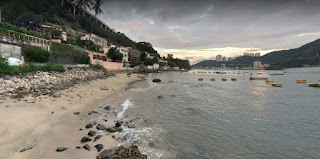
Ting Kau Beach

Lung Kwu Tan Beach

Golden Beach

Castle Peak Promenade
From Tuen Mun, Lung Mun Road gets too industrial and is not the most scenic part of the city, but past the power plant, you are on the west coast as it becomes Lung Kwu Tan Road. Past Pak Nai and its famous sunsets, which I did not see since this was the middle of the day, I was on a tiny road that wound around Shenzhen Bay. There is no more coast at that point without going into Mainland China, where it gets far more crowded.

Pak Nai
Fung Lok Wai is an enormous river/marshland/fish farm that looks like it is in the middle of nowhere. Unless you face north. Then you get skyline views of Shenzhen.

Fung Lok Wai

Wetland Park

Shenzhen
Heading east took me away from the water and up into the hills. At Fanling, it got too crowded, so I took the winding Sha Tau Kok Road toward Yantian on the east coast. Heading south on Bride's Pool Road, I went uphill on what could have been a canyon road in Southern California before heading downhill to Bride's Pool Waterfall. I could have easily spent the whole day at the river, but I was there to drive. After heading downhill some more, I was looking at the reservoir and Tolo Harbour. It gets crowded at Tai Po and it was getting too late for a drive to Clear Water Bay, so I headed back into civilization. Had I planned the trip ahead of time, I could have made a larger circle around most of the city, but I avoided the peninsula on purpose.

Sha Tau Kok Harbour

Brides Pool
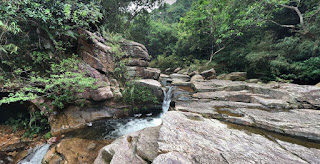
Brides Pool

Shuen Wan Harbour

Tolo Harbour

Tai Po

Clear Water Bay
As I expected, there were no complications from the drive. Other than some light construction here and there. Hong Kong is a constant construction zone, so avoiding it is practically impossible. I have never had a problem with switching from proper driving on the right side of the road to the inferior British system of driving on the left. A lot of roads in Hong Kong are segregated and give you no choice. Sitting behind the steering wheel on the right side of the car is interesting, and I wondered if I would have any problems. I never have before, but my brain was never cut open before. The pedals are all the same, of course, but using both your left hand and left foot to shift is different. The balance is gone. The only part that tripped me up was the turn signal/windshield wipers. Since the steering wheel and gear shift were reversed, I wanted the turn signal to be reversed as well. It was not, so every time I wanted to turn, I flipped on the wiper blades.
I experienced no PTSD or panic attacks while driving. Maybe I was overly cautious at intersections, but that is not a bad idea in China. I might have held my breath whenever I saw someone run a red light. I might want to get over that. Nothing I ever say or do will change the selfish driving habits around here. I don't know when I will drive a car again, but it looks like I should be able to do it without any psychological trauma.
Trying to park, on the other hand, might drive me insane.
The Great Wall of China part 1
I don't own a car. I live in Hong Kong. We have excellent public transportation and five parking spaces for a million cars. It is faster to walk from Wan Chai to Admiralty than to drive. I borrowed a car from a friend. Why they have a car is beyond me.

Hong Kong might not be the best place in the world to drive, but there are a few relatively uncrowded roads if you head north. Hong Kong Island and Kowloon are nothing but traffic. Lantau is getting more crowded all the time. North of Tsuen Wan is pretty much your only option. Fortunately, that is an area five times larger than Hong Kong Island.
Castle Peak Road from Tsuen Wan to Tuen Mun hugs the East Bay, which is on the west coast, and passes under a popular bridge, a couple of tiny beaches and a pretty big one at Castle Peak Bay. You can't drive down the Castle Peak Bay Promenade, but it is a nice place for a walk.


From Tuen Mun, Lung Mun Road gets too industrial and is not the most scenic part of the city, but past the power plant, you are on the west coast as it becomes Lung Kwu Tan Road. Past Pak Nai and its famous sunsets, which I did not see since this was the middle of the day, I was on a tiny road that wound around Shenzhen Bay. There is no more coast at that point without going into Mainland China, where it gets far more crowded.

Fung Lok Wai is an enormous river/marshland/fish farm that looks like it is in the middle of nowhere. Unless you face north. Then you get skyline views of Shenzhen.


Heading east took me away from the water and up into the hills. At Fanling, it got too crowded, so I took the winding Sha Tau Kok Road toward Yantian on the east coast. Heading south on Bride's Pool Road, I went uphill on what could have been a canyon road in Southern California before heading downhill to Bride's Pool Waterfall. I could have easily spent the whole day at the river, but I was there to drive. After heading downhill some more, I was looking at the reservoir and Tolo Harbour. It gets crowded at Tai Po and it was getting too late for a drive to Clear Water Bay, so I headed back into civilization. Had I planned the trip ahead of time, I could have made a larger circle around most of the city, but I avoided the peninsula on purpose.


As I expected, there were no complications from the drive. Other than some light construction here and there. Hong Kong is a constant construction zone, so avoiding it is practically impossible. I have never had a problem with switching from proper driving on the right side of the road to the inferior British system of driving on the left. A lot of roads in Hong Kong are segregated and give you no choice. Sitting behind the steering wheel on the right side of the car is interesting, and I wondered if I would have any problems. I never have before, but my brain was never cut open before. The pedals are all the same, of course, but using both your left hand and left foot to shift is different. The balance is gone. The only part that tripped me up was the turn signal/windshield wipers. Since the steering wheel and gear shift were reversed, I wanted the turn signal to be reversed as well. It was not, so every time I wanted to turn, I flipped on the wiper blades.
I experienced no PTSD or panic attacks while driving. Maybe I was overly cautious at intersections, but that is not a bad idea in China. I might have held my breath whenever I saw someone run a red light. I might want to get over that. Nothing I ever say or do will change the selfish driving habits around here. I don't know when I will drive a car again, but it looks like I should be able to do it without any psychological trauma.
Trying to park, on the other hand, might drive me insane.
The Great Wall of China part 1
Tuesday, January 16, 2018
The Boys in the Band All Play Hot Licks
I'm thinking about buying a drum set. That might not be great news for my roommates or neighbors, but my doctor agrees that it would be good therapy. The rhythm and coordination necessary to play the drums is great for synchronizing the hemispheres of the brain and generating neural connections. It is especially good for the frontal lobe. Playing drums lowers stress hormones and produces endorphins, which are great pain relievers. It is also similar to meditation in that it forces you to be here now.
I used to play the drums in another world. My grandfather was a jazz drummer and he always let me bang on his set whenever we went to visit. He also taught me everything I needed to know about polyrhythms, syncopation, rudiments and tuning the drum heads. As soon as I was tall enough to reach everything, he bought me my own set. He might have done it to annoy my parents, but whatever the motivation, it got me playing music beyond scales on the piano during vocal exercises. I played that drum set every day until it “accidentally” destroyed itself and had to be thrown away while I was out of the house. I played tenor drums in high school, but those belonged to the school, so they were never in any real danger.
I have not actually sat at a drum set in a long time, so it might take a while to get up to speed, but that might be perfect. My doctor does not want me to go full Neil Peart, as if that could ever happen. He would prefer something more mellow, like Ralph Cooper. The goal is to synchronize all the limbs, not to make as much noise as possible. My biggest concern is that my grandfather taught me to use traditional grip, but then I switched to matched grip when I played quads. I don't know which position, if either, will feel right anymore.
My second biggest concern is that the set might “accidentally” destroy itself when I am out of the apartment.
I used to play the drums in another world. My grandfather was a jazz drummer and he always let me bang on his set whenever we went to visit. He also taught me everything I needed to know about polyrhythms, syncopation, rudiments and tuning the drum heads. As soon as I was tall enough to reach everything, he bought me my own set. He might have done it to annoy my parents, but whatever the motivation, it got me playing music beyond scales on the piano during vocal exercises. I played that drum set every day until it “accidentally” destroyed itself and had to be thrown away while I was out of the house. I played tenor drums in high school, but those belonged to the school, so they were never in any real danger.
I have not actually sat at a drum set in a long time, so it might take a while to get up to speed, but that might be perfect. My doctor does not want me to go full Neil Peart, as if that could ever happen. He would prefer something more mellow, like Ralph Cooper. The goal is to synchronize all the limbs, not to make as much noise as possible. My biggest concern is that my grandfather taught me to use traditional grip, but then I switched to matched grip when I played quads. I don't know which position, if either, will feel right anymore.
My second biggest concern is that the set might “accidentally” destroy itself when I am out of the apartment.
Subscribe to:
Posts (Atom)